How to Check and Read Trouble Codes on a 2014 Dodge Ram
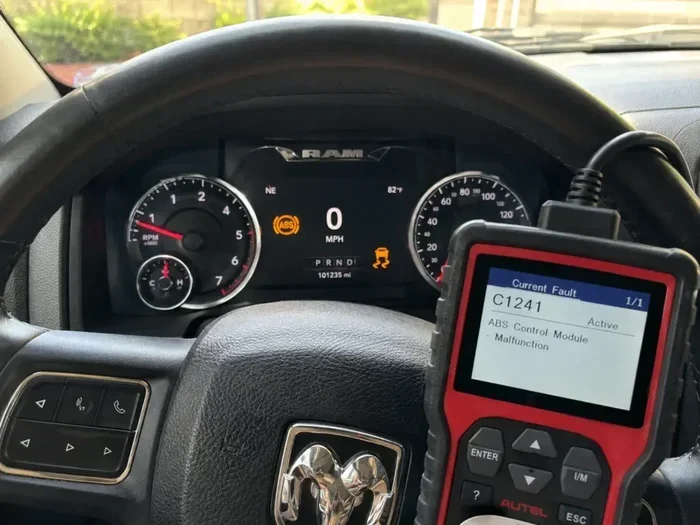
Checking trouble codes on a 2014 Dodge Ram is easier than most people think. With a simple OBD-II scanner and this guide, you can diagnose problems in minutes. You will learn how to locate the port, read codes, understand what they mean, and take the right next steps to fix them.
There is nothing more frustrating than seeing the check engine light flash on your dashboard. If you drive a 2014 Dodge Ram, you are not alone. Thousands of truck owners face this same moment every single day. The good news is that you do not need to panic or rush to the mechanic just yet.
Learning how to check trouble codes on a 2014 Dodge Ram can save you time, money, and a lot of stress. With the right OBD-II scanner and a little patience, you can figure out what is going on under the hood. This guide walks you through every single step. By the end, you will feel confident reading diagnostic trouble codes like a seasoned technician.
We will cover everything from finding the OBD port to understanding what each fault code means. You will also learn when it is smart to tackle a fix yourself and when it is best to call in a professional. Let us get started.
Key Takeaways
- OBD-II Scanner is Essential: A reliable scan tool is the key to reading and clearing trouble codes on your 2014 Dodge Ram.
- Know Your Port Location: The OBD-II port on a 2014 Dodge Ram is located under the dashboard on the driver side.
- Interpret Codes Correctly: Understanding the first letter and numbers in a code helps you pinpoint the exact problem.
- Don’t Just Clear Codes: Fixing the root cause is more important than erasing the check engine light.
- Preventive Maintenance Matters: Regular upkeep reduces the chances of recurring trouble codes.
- When in Doubt, See a Pro: Some codes require professional diagnostic equipment and expertise.
📑 Table of Contents
What Are Trouble Codes and Why They Matter
Before you plug in any device, it helps to understand what trouble codes actually are. Your 2014 Dodge Ram is packed with sensors that monitor nearly every system. When something goes wrong, the truck’s computer stores a DTC code in its memory. This code tells you exactly what went wrong and where.
The On-Board Diagnostics II system, known as OBD-II, has been standard in all cars sold in the United States since 1996. Your Dodge Ram uses this system to track the emission system, fuel delivery, ignition timing, and more. When a sensor detects a problem outside normal range, it triggers a code. The powertrain control module acts as the brain of this system. It collects data from all the sensors and compares it against factory specifications. If something does not match, it logs a fault code and lights up your dashboard. This is your truck talking to you. You just need to know how to listen.
How the OBD-II System Works
Your 2014 Dodge Ram relies on a network of sensors and modules that communicate through the OBD-II system. The powertrain control module receives constant updates from sensors measuring oxygen levels, engine temperature, throttle position, and exhaust composition. When any of these readings fall outside the acceptable range, the system generates a diagnostic trouble code. The check engine light then illuminates to alert you.
The beauty of this system is that it gives you a starting point. You do not have to guess or pull parts randomly. The code points you toward the affected system. From there, you can dig deeper and find the root cause. This saves enormous time compared to old-school troubleshooting methods.
Common Trouble Codes for the 2014 Dodge Ram
Not all codes are created equal. Some are minor. Others signal serious problems. Here are some of the most common error codes you might see on a Dodge Ram 1500:
- P0300: Random misfire detected. This often points to ignition or fuel delivery problems.
- P0171: System too lean on Bank 1. Usually a vacuum leak or fuel delivery issue.
- P0420: Catalyst system efficiency below threshold. The catalytic converter may be failing.
- P0455: Evaporative emission control system leak detected. A loose gas cap is a common cause.
- P0301-P0308: Cylinder-specific misfire codes. Each number corresponds to a specific cylinder.
- P0135: Oxygen sensor heater circuit malfunction. The sensor may need replacement.
- P0442: Small evaporative emission control leak. Often caused by a cracked hose or loose cap.
These repair codes give you a starting point. They tell you which system is affected but not always the root cause. That is why further investigation is important. A misfire code could mean bad spark plugs, a faulty coil, or a vacuum leak. You need to investigate further before replacing parts.
Tools You Need to Check Trouble Codes
Checking trouble codes does not require expensive shop equipment. A basic scan tool or code reader tool can do the job. Here is what you will need before you start.
Choosing the Right OBD-II Scanner
There are two main types of devices you can use. A basic code reader tool plugs into the port and displays the codes. A more advanced scan tool gives you live sensor data, freeze frame information, and the ability to clear codes. For most DIY owners, a mid-range scanner strikes the best balance between cost and functionality.
Look for a scanner that supports vehicle diagnostics for American trucks. Many generic readers work fine, but brand-specific tools often provide better descriptions for Dodge models. If you want to monitor sensor readings in real time, invest in a scanner with live data streaming capability. Some advanced units even offer guided repair workflows and wiring diagrams.
If you plan to use power-hungry diagnostic equipment in your truck, a 12V to 230V car inverter converts your battery power into AC electricity for your tools. This is especially helpful if you are working in a garage without accessible outlets. It lets you run laptops, printers, or other devices while diagnosing your Dodge Ram.
Power and Accessory Needs
Most OBD-II scanners draw very little power and work directly through the port. However, if you use additional tools like a laptop or tablet for deeper analysis, a reliable power source matters. Many diagnostic tools and phone chargers work through a standard 12V car socket to 3 pin adapter that fits right into your dashboard outlet. Keep a few adapters on hand so you are always ready to power up your diagnostic equipment.
Also consider getting a backup battery pack. If your truck sits for long periods, the battery can drain. A portable jump starter doubles as a reliable power source for your scanning tools. This small investment can save you from frustrating mid-diagnosis power failures.
Step-by-Step Guide to Reading Trouble Codes
Now that you have your tools ready, let us walk through the actual process. Reading codes on a 2014 Dodge Ram is straightforward once you know where to look and what to do.
Locating the OBD-II Port
The OBD port on a 2014 Dodge Ram is located under the dashboard on the driver side. You will find it near the steering column, below the radio area. It is a 16-pin trapezoidal connector. It might be hidden behind a small plastic cover or a rubber flap. Just pop it open and you are ready to go.
If you have trouble finding it, check your owner’s manual. The exact location can vary slightly depending on the cab style and trim level. But in every case, it is within arm’s reach of the driver seat. You should not have to crawl around or remove any panels to access it.
Connecting and Reading Codes
Follow these steps to read your codes:
- Turn the ignition to the “ON” position. Do not start the engine. Just power on the electronics.
- Plug the scanner into the OBD port firmly until it clicks into place.
- Turn on the scanner and wait for it to connect with the truck’s computer.
- Select “Read Codes” or “Scan” on the device menu.
- Write down every code that appears. Include the first letter, the numbers, and any suffix letters.
- Note any freeze frame data if your scanner displays it. This shows the conditions when the code was triggered.
Take your time with this process. Rushing can lead to missed codes or incorrect readings. If the scanner asks you to input your vehicle details, make sure you select the correct year, make, and model. Some scanners also let you view freeze frame data, which captures the engine conditions at the exact moment the code was set. This information is incredibly valuable for accurate diagnosis.
Interpreting the Codes
Every diagnostic trouble code follows a standard format. The first character tells you the system category:
- P = Powertrain (engine and transmission)
- B = Body (airbags, climate control, comfort systems)
- C = Chassis (ABS, braking, suspension)
- U = Network (communication between modules)
The second character tells you if it is a generic (0) or manufacturer-specific (1) code. The third character narrows it down to a specific subsystem. The last characters identify the exact problem. For example, a code starting with P0301 means a generic powertrain code for cylinder 1 misfire. A code starting with P1XXX would be a Dodge-specific manufacturer code.
Understanding this format helps you figure out whether the issue is serious or minor. A misfire code demands immediate attention because unburned fuel can damage the catalytic converter. A loose gas cap code can wait until your next fuel stop. Use this knowledge to prioritize your repairs.
What to Do After You Get Your Codes
Getting the codes is only half the battle. The real work begins when you need to act on them. Here is how to handle what comes next.
Clearing Codes vs. Fixing the Problem
It can be tempting to simply clear the codes and drive away. But that is not a real fix. If the underlying problem is still there, the codes will come back within minutes or miles. Clearing codes without addressing the root cause can also hide serious issues that get worse over time and become more expensive to repair.
Always investigate the code first. Check the relevant sensors, wiring, and components. Use your scanner to monitor live sensor readings and see if they fall within normal range. Only after you have confirmed the fix should you clear the codes and take a test drive. A short drive around the block lets the truck’s computer re-run its self-tests and confirm the repair was successful.
When to See a Professional
Some codes are straightforward. Others require specialized knowledge and equipment. If you see codes related to the transmission, ABS braking system, or airbag system, it is best to consult a certified mechanic. These systems are safety-critical and mistakes can be dangerous.
Also, if you have checked the obvious causes and the codes persist, a professional-level vehicle diagnostics session can uncover hidden problems. Deep electrical issues, intermittent faults, and software glitches often need advanced tools that go beyond a basic scanner. A qualified technician has access to manufacturer-level diagnostic software and training that can resolve complex issues quickly.
Understanding how much weight your truck carries is important, and you can learn more about what weight is too heavy for a vehicle in our related guide. Overloading your Dodge Ram can trigger multiple codes and cause long-term damage to the drivetrain, brakes, and suspension components.
Preventing Future Trouble Codes
The best way to deal with trouble codes is to prevent them from appearing in the first place. Regular maintenance goes a long way toward keeping your 2014 Dodge Ram running smoothly and trouble-free.
Regular Maintenance Tips
- Check your gas cap regularly. A loose or worn cap is the number one cause of emission-related codes. Make sure it clicks at least three times after tightening.
- Change your spark plugs on schedule. Worn plugs are a leading cause of misfire codes. Follow the maintenance interval in your owner’s manual.
- Keep up with oil changes. Dirty oil can affect sensor readings and engine performance. Use the recommended grade and change it on time.
- Inspect vacuum hoses. Cracks and leaks in vacuum lines often trigger lean condition codes. A simple visual inspection can catch problems early.
- Use quality fuel. Cheap or contaminated fuel can cause fuel system codes and rough running. Stick with reputable gas stations.
- Monitor your temperature gauge. Overheating can damage the engine and trigger multiple codes at once. Check your coolant level regularly.
- Scan your truck periodically. Even if the check engine light is off, occasional scans can catch codes before they become serious problems.
These simple habits keep your truck healthy and your check engine light off. A well-maintained Dodge Ram 1500 is far less likely to throw unexpected codes. Prevention is always cheaper and easier than repair.
Quick Tips for Checking Trouble Codes
Here are some extra tips that experienced truck owners swear by:
- Always turn the ignition to ON before plugging in your scanner. Plugging in with the ignition off can sometimes cause communication errors.
- Write down codes immediately. Some scanners only display one code at a time and you may lose previous codes if you navigate away.
- Use a trouble code reader that stores codes in memory. This lets you review them later without reconnecting.
- If you get a code you do not understand, search for it online before assuming the worst. Many codes have simple and inexpensive fixes.
- Keep your scanner software updated. Manufacturers release updates that add support for new codes and vehicle models.
- Use a code reader tool with a bilingual display if English is not your first language. This makes interpretation much easier.
These small habits make a big difference. They help you get accurate readings and avoid unnecessary trips to the shop. Over time, you will build a library of knowledge about your specific truck.
Common Mistakes When Checking Trouble Codes
Even experienced DIYers make mistakes. Here are some to avoid:
- Clearing codes before researching them. You lose valuable information about when and why the code was triggered. Always write them down first.
- Ignoring freeze frame data. This data gives you context about engine RPM, temperature, and load when the code fired. It is incredibly useful for accurate diagnosis.
- Assuming one code means one problem. Sometimes a single root cause triggers multiple codes. Fix the root cause, not just the symptoms.
- Using an incompatible scanner. Not all scanners work with all vehicles. Make sure your device supports the 2014 Dodge Ram before you buy it.
- Neglecting battery voltage. A weak battery can cause erratic sensor readings and false codes. Always check your battery health first.
Avoiding these mistakes saves you time and frustration. It also protects your truck from unnecessary repairs and wasted money on the wrong parts.
Final Thoughts
Knowing how to check trouble codes on a 2014 Dodge Ram puts you in control of your truck’s health. You no longer have to guess what that blinking light means or spend money on unnecessary diagnostic visits. With a basic scanner and the knowledge from this guide, you can handle most common issues on your own.
Remember, trouble codes are your truck’s way of communicating with you. They point you in the right direction. They do not always tell the whole story, but they give you a strong starting point. Use them wisely, fix problems promptly, and your Dodge Ram will reward you with years of reliable service.
Keep this guide bookmarked for future reference. Every time a code appears, you will know exactly what to do. Happy diagnosing, and drive safely.
Frequently Asked Questions
Can I check trouble codes on a 2014 Dodge Ram without a scanner?
You can sometimes read codes by turning the ignition on and off in a specific sequence, but this method is unreliable and limited. A proper OBD-II scanner gives you accurate codes, descriptions, and freeze frame data. Investing in a basic scanner is well worth the cost for any Dodge Ram owner.
How much does an OBD-II scanner cost for checking trouble codes?
Basic code reader tools start around $20 to $50. Mid-range scanners with live data capabilities cost between $50 and $150. Professional-grade scan tools can run $200 or more. For most DIY owners, a mid-range scanner offers the best value and functionality.
Is it safe to drive my 2014 Dodge Ram with the check engine light on?
It depends on the code. If the light is steady and not flashing, you can usually drive a short distance to a safe location. However, if the light is flashing, it often indicates a serious misfire that can damage the catalytic converter. Stop driving and get the truck inspected as soon as possible.
Can a loose gas cap cause trouble codes on a 2014 Dodge Ram?
Yes, a loose or damaged gas cap is one of the most common causes of the P0455 and P0442 codes. These are evaporative emission system codes. Simply tightening or replacing the gas cap often resolves the issue. After fixing it, the codes may take a few drive cycles to clear automatically.
Will clearing trouble codes turn off the check engine light permanently?
Only if the underlying problem has been fixed. If you clear codes without repairing the issue, the check engine light will return once the truck’s computer detects the problem again. Always diagnose and fix the root cause before clearing any codes.
How often should I scan my 2014 Dodge Ram for trouble codes?
There is no set schedule, but scanning your truck every few months is a good habit. You should also scan anytime you notice changes in performance, fuel economy, or if the check engine light comes on. Regular scans help you catch small problems before they become expensive repairs.
=== CONCLUSION ===
Learning how to check trouble codes on a 2014 Dodge Ram is one of the most useful skills a truck owner can develop. It empowers you to understand what your vehicle is telling you and take action quickly. With a simple scanner, some basic knowledge, and the steps outlined in this guide, you can handle most common diagnostic situations with confidence.
Remember to always diagnose before you repair, and never ignore a flashing check engine light. Keep up with regular maintenance and your truck will stay healthy for years to come. The more you practice, the more comfortable you will become with the process. Happy diagnosing!