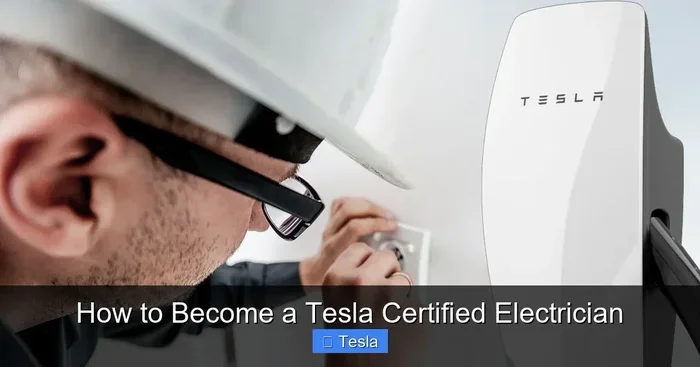
Your Guide to Becoming a Tesla Certified Electrician
Becoming a Tesla certified electrician opens doors to exciting careers in the fast-growing electric vehicle industry. You need a solid electrical foundation, specialized Tesla training, and hands-on experience with high-voltage systems. This guide walks you through every step clearly and practically.
Electric vehicles are changing how we think about transportation. Tesla leads this shift with cutting-edge technology and a massive network of service centers worldwide. Behind every smoothly running Tesla is a skilled Tesla certified electrician who keeps the systems safe and efficient.
If you are an electrician or someone exploring a career in the EV world, you might wonder how to get Tesla certified. The process is structured, rewarding, and very much worth the effort. This guide breaks it all down in simple, easy-to-follow steps.
Whether you already hold an electrical license or are just starting out, understanding the path to Tesla certification helps you plan your next move. Let us dive in and explore what it takes.
Key Takeaways
- Tesla certification validates your expertise in electric vehicle repair and maintenance.
- You need a valid electrical license and hands-on experience before applying.
- The training covers high-voltage safety, EV charging systems, and Tesla-specific diagnostics.
- Certified electricians earn higher salaries and access exclusive Tesla service opportunities.
- Continuous learning is essential as Tesla updates its technology regularly.
- Understanding basic car electrical systems like 12V car socket conversions builds a strong foundation.
📑 Table of Contents
- What Is a Tesla Certified Electrician?
- Why Tesla Certification Matters for Electricians
- Steps to Become a Tesla Certified Electrician
- Training and Education Requirements
- What to Expect During the Certification Process
- Common Mistakes to Avoid
- Career Opportunities After Certification
- Quick Tips for Aspiring Tesla Certified Electricians
- Expert Insights on Tesla Certification
- How Long Does It Take to Get Certified?
- How Much Does the Certification Cost?
- Conclusion
What Is a Tesla Certified Electrician?
A Tesla certified electrician is a licensed professional who has completed Tesla’s official training program. This certification proves you can safely work on Tesla vehicles, especially their high-voltage electrical systems. Tesla vehicles use advanced electric vehicle technology that standard automotive training does not always cover.
These electricians handle everything from battery diagnostics to EV charging system installations. They also perform routine maintenance and complex repairs that require deep technical knowledge. Without proper certification, working on a Tesla can be dangerous and may void the vehicle warranty.
Why Does Tesla Require Certification?
Tesla vehicles operate on high-voltage electrical systems that can deliver hundreds of volts. Handling these systems without proper training poses serious safety risks. Tesla requires certification to ensure every technician meets strict safety and performance standards.
The company also wants to maintain consistent service quality across all its service centers. A certified Tesla technician understands the unique software and hardware integrated into every Tesla model. This knowledge helps diagnose issues faster and more accurately.
Many people also ask about how hybrids work alongside full EVs. For example, understanding at what speed hybrids switch to gas gives electricians broader context about hybrid and EV electrical behavior.
Why Tesla Certification Matters for Electricians
Getting certified is not just a badge on your resume. It opens real doors in the booming EV industry. Here is why it matters so much.
Higher Earning Potential
Certified Tesla electricians typically earn more than non-certified peers. The specialized skills you gain command higher pay rates. Many Tesla service centers offer competitive salaries, benefits, and bonuses for certified technicians.
Access to Exclusive Opportunities
Tesla has a growing network of service centers and mobile service fleets. These locations often hire only certified Tesla technicians. Without certification, you simply cannot apply for these roles.
Some certified electricians also work independently, offering Tesla-specific services to private owners. This flexibility is a huge advantage in today’s job market.
Staying Relevant in a Changing Industry
The automotive industry is shifting rapidly toward electrification. Traditional combustion engine jobs are declining. By becoming a Tesla certified electrician, you future-proof your career. You position yourself at the forefront of automotive innovation.
Understanding how systems like 12V to 230V car inverters work also gives you a broader electrical skill set that complements Tesla-specific training beautifully.
Steps to Become a Tesla Certified Electrician
The path to certification is clear but requires dedication. Here is a step-by-step breakdown of the process.
Step 1: Get Your Electrical License
You need a valid electrical contractor license or equivalent qualification. Most regions require you to complete an apprenticeship or formal electrical program first. This usually takes two to four years of hands-on training.
During this time, focus on learning about high-voltage systems and automotive electrical basics. The stronger your foundation, the easier the Tesla training will be.
Step 2: Gain Relevant Work Experience
Tesla prefers candidates with real-world electrical experience. Working as an automotive electrician or in a related field builds practical skills. Aim for at least one to two years of experience before applying.
Experience with electric vehicle systems is especially valuable. Even basic exposure to EV charging setups helps you stand out during the application process.
Step 3: Apply for Tesla Training
Visit the Tesla Careers or Tesla Service page to find training opportunities. Tesla offers internal training programs for eligible candidates. You may need to apply through a Tesla service center directly.
The application process typically includes:
- Submitting your electrical license and credentials
- Providing proof of relevant work experience
- Passing a basic technical assessment
- Attending an interview with Tesla service management
Step 4: Complete Tesla Training Program
Once accepted, you enter Tesla’s structured training program. This covers all aspects of working on Tesla vehicles safely and effectively.
Step 5: Pass Certification Exams
After training, you must pass written and practical exams. These test your knowledge of Tesla systems, safety protocols, and repair procedures. Once you pass, you officially become a Tesla certified electrician.
Training and Education Requirements
The training program covers a wide range of topics. Here is what you can expect to learn.
High-Voltage Safety Protocols
Safety comes first when working with high-voltage electrical systems. Tesla training teaches you how to handle batteries, power electronics, and charging components safely. You learn proper lockout procedures and personal protective equipment use.
Tesla-Specific Diagnostics
Tesla vehicles rely heavily on software and sensors. The training covers Tesla diagnostic tools and software platforms. You learn to read error codes, interpret system alerts, and perform accurate repairs.
EV Charging System Installation
Installing and maintaining EV charging systems is a core part of the certification. You learn about home chargers, destination chargers, and Tesla Supercharger setups. This knowledge is incredibly valuable for independent electricians too.
For electricians who also deal with vehicle electrical conversions, understanding systems like at what point does a hybrid switch to gas provides useful context about how different vehicle types manage electrical power transitions.
Battery Technology and Maintenance
Tesla batteries are the heart of every vehicle. The training covers battery architecture, degradation patterns, and replacement procedures. You also learn about thermal management systems that keep batteries at optimal temperatures.
Software Updates and Over-the-Air Features
Tesla vehicles receive regular software updates. Certified electricians need to understand how these updates affect vehicle performance and diagnostics. This is a unique aspect of Tesla work compared to traditional automotive repair.
What to Expect During the Certification Process
The certification process is rigorous but manageable if you prepare well. Here is a realistic look at what lies ahead.
| Stage | Duration | Focus Area |
|---|---|---|
| Application Review | 1-2 weeks | Credentials and experience verification |
| Initial Training | 1-2 weeks | Safety protocols and system overview |
| Hands-On Training | 2-4 weeks | Real vehicle diagnostics and repair |
| Exam Preparation | 1 week | Review and practice testing |
| Certification Exam | 2-3 days | Written and practical assessments |
The total process usually takes four to eight weeks from start to finish. Tesla provides all necessary training materials and tools. You do not need to purchase expensive equipment on your own.
Tips for Success
- Prepare thoroughly for each stage. Review Tesla technical documentation before training begins.
- Practice safety procedures until they become second nature. Muscle memory saves lives with high-voltage work.
- Ask questions during hands-on sessions. There is no such thing as a silly question when learning new systems.
- Study Tesla service manuals and technical service bulletins. These resources give you insider knowledge about common issues.
- Connect with other certified electricians. Building a professional network helps you stay updated on best practices.
Common Mistakes to Avoid
Many aspiring Tesla certified electricians make avoidable mistakes along the way. Here are the most common ones and how to steer clear.
- Skipping foundational electrical training. Do not rush into Tesla-specific training without a solid electrical background. The fundamentals matter enormously.
- Underestimating the safety training. High-voltage work is not something you take lightly. Always follow every safety protocol to the letter.
- Neglecting software training. Tesla vehicles are as much computers as they are cars. Ignoring the software side limits your effectiveness.
- Not staying current with updates. Tesla regularly releases new models and updates existing ones. Continuous learning keeps your skills relevant.
- Applying without enough hands-on experience. Tesla values practical skills. Theoretical knowledge alone is not enough to pass the certification exams.
Career Opportunities After Certification
Once you earn your Tesla certification, exciting career paths open up. Let us explore the most promising options.
Working at a Tesla Service Center
This is the most common path for certified electricians. Tesla service centers are located in major cities worldwide. You work directly with Tesla vehicles every day and get access to the latest tools and training.
Mobile Service Technician
Tesla operates mobile service vans that travel to customers. As a mobile technician, you perform repairs and diagnostics at the customer’s location. This role offers variety and independence.
Independent EV Specialist
Some certified electricians start their own businesses focused on EV services. You can offer charging installations, Tesla maintenance, and electrical upgrades to EV owners in your area.
Tesla Supercharger Installation
Tesla Supercharger networks need skilled electricians for installation and maintenance. This is a growing field with strong demand as Tesla expands its charging infrastructure globally.
Quick Tips for Aspiring Tesla Certified Electricians
- Start with a strong electrical foundation before targeting Tesla specifically.
- Gain at least one year of hands-on automotive or industrial electrical experience.
- Study Tesla’s official technical documentation available online.
- Practice high-voltage safety procedures regularly, even outside formal training.
- Join online communities of Tesla technicians to learn from others’ experiences.
- Keep your electrical license and certifications up to date at all times.
- Stay curious about new EV technologies beyond just Tesla.
Expert Insights on Tesla Certification
Industry experts agree that Tesla certification is one of the most valuable credentials in the EV space. The certification signals to employers that you can handle complex electric vehicle systems with confidence and safety.
Many certified electricians report that the training changed their careers. They went from general electrical work to specialized, high-demand EV roles. The investment in time and effort pays off quickly through better job opportunities and higher income.
One experienced technician shared that understanding basic electrical concepts like voltage conversion and circuit protection made the Tesla training much easier. Building on what you already know is the smartest approach.
How Long Does It Take to Get Certified?
The timeline varies depending on your starting point. If you already hold an electrical license and have relevant experience, the process can take as little as four to six weeks. For those starting from scratch, expect eight to twelve months including education and apprenticeship.
The key is not to rush. Taking the time to build genuine skills ensures you become a competent and confident Tesla certified electrician. Speed means nothing if you cannot perform the work safely and correctly.
How Much Does the Certification Cost?
Tesla does not charge a separate fee for its certification training. The training is provided as part of the employment process for Tesla service center technicians. However, if you need to obtain or renew your electrical license beforehand, there may be costs involved.
These costs vary by region but typically include exam fees, continuing education requirements, and license renewal charges. Budget a few hundred to a few thousand dollars depending on your current qualifications.
Conclusion
Becoming a Tesla certified electrician is a smart career move for any electrician passionate about electric vehicles. The certification gives you specialized skills, higher earning potential, and access to exciting opportunities in the EV industry. The process is structured, comprehensive, and designed to set you up for real success.
Start by building your electrical foundation, gaining experience, and applying for Tesla training. Stay committed to learning and safety throughout the journey. The world of electric vehicles needs skilled professionals, and your path to becoming a Tesla certified electrician starts today.
Take the first step now. Your future in EV technology awaits.
Frequently Asked Questions
What exactly does a Tesla certified electrician do?
A Tesla certified electrician diagnoses, repairs, and maintains Tesla vehicles. They work on high-voltage battery systems, charging infrastructure, and complex electrical components. They also perform software-related diagnostics and safety inspections.
Can any electrician become Tesla certified?
Not every electrician qualifies. You need a valid electrical license and relevant hands-on experience. Tesla also requires you to pass their specific training program and certification exams before you can officially work on their vehicles.
Is Tesla certification recognized outside of Tesla service centers?
Yes, many independent shops and EV startups value Tesla certification. It demonstrates advanced knowledge of electric vehicle systems. However, the most direct opportunities remain within Tesla’s own service network and authorized partners.
Do I need a degree to become a Tesla certified electrician?
A college degree is not required. What matters most is a valid electrical license and practical experience. Many successful Tesla certified electricians come from apprenticeship backgrounds rather than formal degree programs.
How often do I need to renew my Tesla certification?
Tesla requires periodic recertification to ensure technicians stay current with new models and technology updates. Renewal typically involves refresher training and passing updated assessments every one to two years.
What is the difference between a Tesla certified electrician and a regular automotive electrician?
A regular automotive electrician works on traditional combustion engine vehicles. A Tesla certified electrician specializes in high-voltage electric vehicle systems, battery technology, and Tesla-specific software. The training and safety requirements for Tesla certification are significantly more advanced.
=== CONCLUSION ===
Becoming a Tesla certified electrician is a journey worth taking. The electric vehicle industry is growing fast, and skilled technicians are in high demand. By following the steps outlined in this guide, you set yourself up for a rewarding and future-proof career.
Focus on building your electrical foundation, gaining hands-on experience, and committing to continuous learning. The road to certification is clear, and the rewards are substantial. Start your journey today and join the ranks of skilled professionals keeping Tesla vehicles safe and running at their best.