How Often to Change Oil in a BMW 3 Series Explained
Knowing how often to change oil in a BMW 3 Series is one of the most important things you can do for your car’s longevity. Most BMW 3 Series models need an oil change every 10,000 to 15,000 miles, but this varies by engine type and model year. Using the right synthetic oil and staying on top of your BMW service schedule will keep your engine healthy and performance-packed for years.
Your BMW 3 Series is a finely tuned machine. It delivers thrilling performance, sharp handling, and a driving experience that few cars can match. But all of that power depends on one simple thing: clean oil. If you have ever wondered how often to change oil in a BMW 3 Series, you are not alone. This question comes up in every BMW owner’s mind, especially when the dashboard reminder lights up.
The answer is not as straightforward as you might think. Different model years, different engines, and different driving habits all play a role. Some BMW 3 Series models need an oil change every 7,500 miles, while others can go up to 15,000 miles. In this guide, we break it all down for you. You will learn the exact intervals, the right oil type, warning signs to watch for, and whether you should do it yourself or visit a shop.
Let us dive in and make sure your BMW stays in top shape.
Key Takeaways
- Standard Interval: Most BMW 3 Series models require oil changes every 10,000 to 15,000 miles under normal driving conditions.
- Oil Type Matters: BMW recommends full synthetic oil, typically LL-01 or LL-04 approved formulations.
- Model Year Differences: Newer models with long oil life systems may extend intervals compared to older generations.
- Engine Size Varies: The BMW 3 Series comes in both 2-litre and 3000cc configurations, each with different oil capacity needs.
- Safety Rating: The BMW 3 Series holds a 5-star safety rating, and proper maintenance including oil changes helps preserve that standard.
- DIY Is Possible: With the right tools and knowledge, you can change your BMW’s oil at home and save on labor costs.
- Watch for Warning Signs: Dark oil, engine noise, and oil level warnings all signal it is time for a change.
📑 Table of Contents
- Why Oil Changes Are So Important for Your BMW 3 Series
- BMW 3 Series Oil Change Intervals by Model Year
- What Type of Oil Does a BMW 3 Series Need?
- Signs Your BMW 3 Series Needs an Oil Change
- DIY Oil Change vs Professional Service
- Common Mistakes to Avoid When Changing Oil
- How to Find the Right Oil Change Service Near You
- Final Thoughts
Why Oil Changes Are So Important for Your BMW 3 Series
Engine oil does more than just lubricate. It cleans internal components, reduces friction, prevents overheating, and protects against corrosion. Over time, oil breaks down and loses its effectiveness. Dirty oil cannot flow properly, which means your engine works harder. That leads to reduced performance, lower fuel efficiency, and eventually serious damage.
BMW engines are high-performance units. They run at higher temperatures than standard car engines. This means the oil degrades faster under extreme conditions. If you push your BMW hard on spirited drives or track days, your oil will wear out even quicker. Regular oil changes keep everything running smoothly and extend the life of your engine.
Think of oil as the lifeblood of your car. Just like you need fresh blood to stay healthy, your BMW needs fresh oil to perform at its best. Skipping oil changes is one of the fastest ways to shorten your engine’s lifespan.
What Happens If You Skip Oil Changes?
Skipping oil changes leads to a buildup of sludge and contaminants. Over time, this sludge clogs oil passages and starves critical engine components. The result can be expensive repairs or even a complete engine replacement. Here are some common consequences:
- Increased engine wear: Metal parts grind against each other without proper lubrication.
- Overheating: Old oil cannot dissipate heat effectively.
- Reduced fuel economy: A poorly lubricated engine consumes more fuel.
- Engine failure: In extreme cases, the engine seizes up entirely.
- Voided warranty: BMW may deny warranty claims if oil change records are not maintained.
The cost of an oil change is tiny compared to the cost of repairing a damaged engine. Staying on top of your oil change schedule is one of the smartest things you can do as a BMW owner.
BMW 3 Series Oil Change Intervals by Model Year
BMW has changed its oil change recommendations over the years. Older models typically needed more frequent changes, while newer models with advanced oil life monitoring systems can go longer between services. Let us look at the intervals by generation.
E36 Generation (1990-2000)
The E36 BMW 3 Series was produced from 1990 to 2000. These models used conventional or synthetic blend oils and required oil changes every 3,000 to 5,000 miles. The oil change interval was shorter because the engines of that era were less efficient and oil technology was not as advanced. If you own an E36, sticking to a 3,000 to 5,000 mile interval is the safest approach.
E46 Generation (2000-2006)
The E46 brought significant improvements in engine technology. BMW started recommending synthetic oil for these models. The standard oil change interval was every 7,500 to 10,000 miles. Some E46 models came with an oil life monitoring system that adjusted the interval based on driving conditions. If you drive in severe conditions, you should shorten the interval to 5,000 to 7,500 miles.
E90 Generation (2006-2013)
The E90 BMW 3 Series was a major leap forward. It introduced turbocharged engines and direct injection technology. BMW recommended oil changes every 10,000 to 15,000 miles for most E90 models. The N20 and N55 engines found in these cars are sensitive to oil quality, so always use BMW-approved synthetic oil. The oil capacity for most E90 models is around 6.5 to 6.9 liters, depending on the engine.
F30 Generation (2013-2019)
The F30 BMW 3 Series brought even more refined engines. The B48 and B58 engines used in these models are designed for longer oil change intervals. BMW recommended oil changes every 10,000 to 15,000 miles under normal driving conditions. However, if you frequently drive in stop-and-go traffic, extreme heat, or dusty conditions, consider shortening the interval to 7,500 miles. These engines are also found in many of the 3000cc cars in India and similar performance segments.
G20 Generation (2019-Present)
The latest G20 BMW 3 Series uses the most advanced engine technology to date. BMW’s oil life monitoring system in these models is highly sophisticated. It tracks driving habits, temperature, and engine load to determine the optimal oil change interval. Under normal conditions, the G20 can go up to 15,000 miles between oil changes. However, BMW still recommends annual oil changes at minimum, even if the system does not trigger a reminder.
What Type of Oil Does a BMW 3 Series Need?
Not all engine oils are created equal. BMW has specific oil requirements that differ from what a standard passenger car needs. Using the wrong oil can void your warranty and potentially damage your engine.
BMW-Approved Synthetic Oils
BMW requires full synthetic oil for all 3 Series models. The two most common BMW oil specifications are LL-01 and LL-04. LL-01 is used for petrol engines and some older diesel engines. LL-04 is specifically designed for BMW diesel engines with particulate filters. Always check your owner’s manual to confirm which specification your engine requires.
Here is a quick breakdown of the oil types commonly used:
- LL-01: For petrol BMW 3 Series engines including the N20, N55, B48, and B58.
- LL-04: For diesel engines with diesel particulate filters.
- BMW 0W-30: The most common viscosity for modern BMW 3 Series petrol engines.
- BMW 5W-30: Used in some older models and colder climate conditions.
- BMW 0W-40: Sometimes recommended for high-performance M Sport models.
Oil Capacity by Engine
Different BMW 3 Series engines have different oil capacities. Here is a general overview:
- 2.0L turbo engines (B48): Approximately 6.5 liters.
- 3.0L turbo engines (B58): Approximately 6.9 liters.
- Older 2.0L and 2.5L engines: Around 6.0 to 6.5 liters.
Always double-check your specific model’s oil capacity before purchasing oil. Overfilling or underfilling can cause engine problems.
Signs Your BMW 3 Series Needs an Oil Change
Even if you follow the recommended interval, there are times when your BMW 3 Series needs an oil change sooner. Learning to recognize these signs can save you from costly repairs down the road.
Dashboard Warning Lights
BMW vehicles come equipped with an oil life monitoring system. When the system detects that the oil needs replacing, it triggers a warning on the dashboard. The oil change indicator light or the check engine light may illuminate. Do not ignore these warnings. They are designed to protect your engine.
Dark or Dirty Oil
Fresh BMW oil is amber or golden in color. As it ages, it darkens due to contaminants and combustion byproducts. You can check your oil level and color using the dipstick. If the oil looks very dark brown or black, it is time for a change. Clean oil should have a translucent amber hue.
Unusual Engine Noise
Clean oil lubricates engine components smoothly. When oil degrades, it loses its lubricating properties. This can cause increased engine noise, including knocking or ticking sounds. If you notice new or unusual sounds coming from your engine bay, check the oil level and condition immediately.
Reduced Performance
Sluggish acceleration, rough idling, or a general feeling of reduced performance can all point to dirty oil. Old oil cannot flow through engine passages efficiently, which means your engine does not get the lubrication it needs. A fresh oil change often restores performance quickly.
Oil Level Drop
All engines burn a small amount of oil between changes. However, if you notice your oil level dropping significantly between scheduled changes, there may be a leak or an internal issue. Have your BMW inspected by a qualified technician as soon as possible.
DIY Oil Change vs Professional Service
One of the most common questions BMW 3 Series owners ask is whether they should change their oil themselves or visit a professional. Both options have pros and cons. Let us break them down.
DIY Oil Change: What You Need
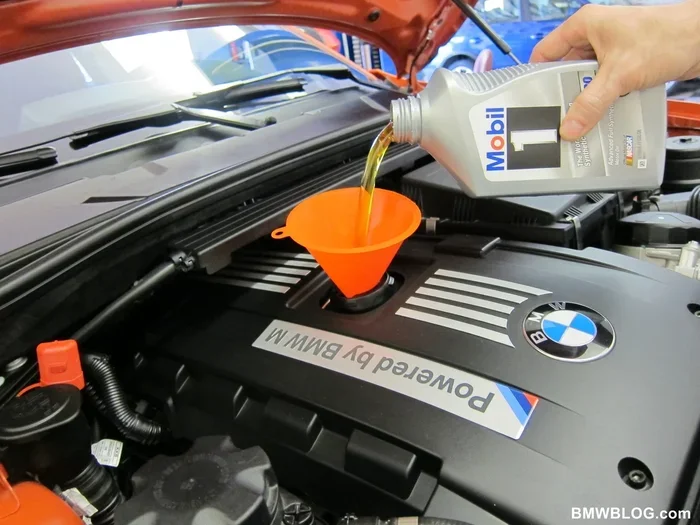
Changing the oil in your BMW 3 Series at home is possible if you have the right tools and knowledge. Here is what you will need:
- BMW-approved synthetic oil (correct quantity for your engine)
- BMW-approved oil filter
- Oil filter wrench
- Jack and jack stands or ramps
- Drain pan
- Socket set and wrenches
- Funnel
- Gloves and safety glasses
A DIY oil change can save you money on labor costs. The average cost of an oil change at a BMW dealership ranges from $150 to $300, depending on your location. Doing it yourself typically costs between $50 and $100 in materials. Over time, those savings add up.
Professional Oil Change: When to Choose It
Professional oil changes come with several advantages. Trained technicians know the specific requirements of BMW engines. They have access to BMW diagnostic tools that can read oil life data and service codes. A professional service also includes a multi-point inspection, which can catch potential issues early.
If you are not comfortable working under your car or do not have the proper tools, a professional oil change is the way to go. It is also the recommended option if your BMW is still under warranty, as improper DIY work could void your coverage.
Quick Tips for a Successful DIY Oil Change
- Always warm up the engine before draining the oil. This helps the oil flow more freely.
- Replace the oil filter every time you change the oil.
- Use a torque wrench to tighten the drain plug to BMW specifications.
- Check the oil level after the change and top off if needed.
- Reset the oil life monitor after the change.
- Dispose of used oil properly at a recycling center.
Common Mistakes to Avoid When Changing Oil
Even experienced car owners make mistakes when changing oil. Here are some common errors to avoid:
Using the Wrong Oil
This is the most common mistake. Using conventional oil instead of synthetic, or using an oil that does not meet BMW specifications, can cause serious engine damage. Always verify the oil meets BMW LL-01 or LL-04 requirements before pouring it into your engine.
Overfilling or Underfilling
Too much oil can cause foaming and increased pressure in the crankcase. Too little oil means your engine is not fully lubricated. Always measure the oil carefully and check the level using the dipstick after adding it.
Skipping the Oil Filter
Some people try to save money by reusing the old oil filter. This is a bad idea. A clogged or worn oil filter cannot properly clean your oil, which means contaminants circulate through your engine. Always install a new BMW-approved oil filter with every oil change.
Ignoring the Oil Life Monitor
BMW’s oil life monitoring system is designed to give you accurate reminders. However, some owners reset the system without actually changing the oil. This defeats the purpose and can lead to running old oil past its useful life. Always change the oil first, then reset the system.
Not Checking for Leaks
After an oil change, always check underneath your car for any leaks. A dripping drain plug or a loose oil filter can cause oil loss over time. Catching a leak early prevents engine damage and costly repairs.
How to Find the Right Oil Change Service Near You
If you prefer professional service, finding the right provider is key. Look for certified BMW mechanics or independent shops that specialize in European vehicles. Many shops offer oil change packages that include the oil, filter, and a basic inspection. You can also check online reviews and ask for recommendations from other BMW 3 Series owners in your area.
Regular oil changes are a small investment that pays big dividends. They keep your BMW running smoothly, protect your warranty, and maintain resale value. Whether you do it yourself or visit a shop, the most important thing is to stay consistent and never skip an oil change.
Your BMW 3 Series is a premium vehicle that deserves premium care. Treat it right, and it will reward you with years of thrilling drives and reliable performance.
Final Thoughts
So, how often should you change oil in a BMW 3 Series? The short answer is every 10,000 to 15,000 miles for most modern models, but this can vary based on your specific engine, model year, and driving conditions. The key is to stay proactive. Check your oil regularly, watch for warning signs, and never skip a scheduled oil change.
Your BMW 3 Series is a 5-star safety rated vehicle that delivers an exceptional driving experience. Keeping up with oil changes is one of the simplest and most effective ways to protect that investment. Whether you own a 2.0L variant or a 3.0L powerhouse, clean oil is the foundation of a healthy engine.
Take the time to understand your BMW’s oil change needs. Your future self and your engine will thank you. Drive safely, maintain your BMW properly, and enjoy every mile on the road.
Frequently Asked Questions
How often should I change oil in my BMW 3 Series?
For most modern BMW 3 Series models, the recommended oil change interval is every 10,000 to 15,000 miles. However, older models may need changes every 5,000 to 7,500 miles. Always check your owner’s manual for the exact interval for your specific model year and engine type.
What type of oil does a BMW 3 Series require?
BMW 3 Series engines require full synthetic oil that meets BMW specifications, typically LL-01 for petrol engines and LL-04 for diesel engines. The most common viscosity is 0W-30, but always verify the correct oil type for your specific model.
Can I change the oil in my BMW 3 Series myself?
Yes, you can perform a DIY oil change if you have the right tools and knowledge. You will need BMW-approved synthetic oil, a compatible oil filter, and basic tools like an oil filter wrench and drain pan. However, if your BMW is under warranty, professional service is recommended to avoid warranty issues.
What happens if I wait too long to change my BMW oil?
Delaying oil changes causes the oil to break down and lose its lubricating properties. This leads to increased engine wear, overheating, reduced performance, and potentially costly engine repairs. Old oil also accumulates sludge that can clog oil passages and damage internal components.
Does driving style affect how often I need to change my BMW 3 Series oil?
Yes, driving in severe conditions such as frequent short trips, stop-and-go traffic, extreme heat, or dusty environments can cause oil to degrade faster. If you drive under these conditions, consider shortening your oil change interval to 7,500 miles or less.
How much does a BMW 3 Series oil change cost?
A professional BMW 3 Series oil change typically costs between $150 and $300 at a dealership, depending on your location and the type of oil used. DIY oil changes cost between $50 and $100 in materials. The cost is a small price compared to the potential expense of engine damage from neglected oil changes.