How Bugattis Quad-Turbocharged Powerplant Works Explained
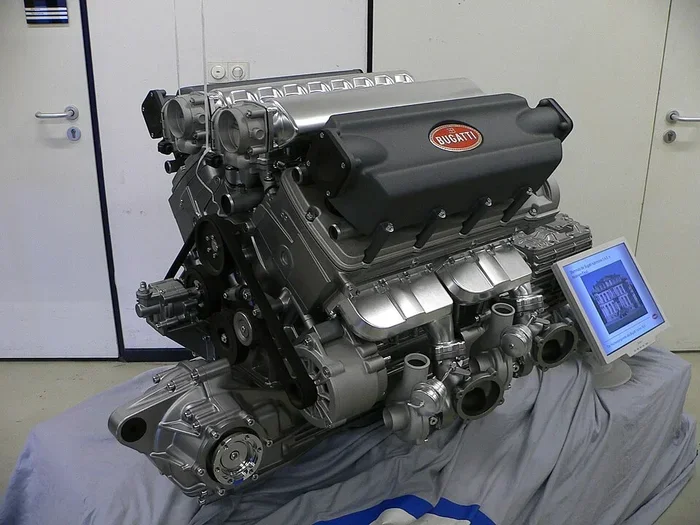
The Bugatti quad-turbocharged powerplant is an engineering marvel that combines a massive W16 engine with four turbochargers to produce mind-blowing performance. This system pushes out over 1,000 horsepower by using forced induction technology to feed each cylinder bank with compressed air. Understanding how this powerplant works gives car enthusiasts a deeper appreciation for the incredible engineering behind Bugatti’s most powerful vehicles.
Key Takeaways
- Four turbochargers work in perfect harmony: Each turbocharger serves a specific cylinder bank, ensuring balanced power delivery across all 16 cylinders.
- The W16 engine layout is unique: Bugatti’s narrow-angle W16 design packs two V8 engines into one compact block for maximum displacement.
- Boost pressure is precisely controlled: Advanced electronic systems manage exhaust flow to each turbo for seamless power delivery.
- Intercooling is essential: The quad-turbo setup uses sophisticated cooling systems to keep intake air temperatures low and prevent engine damage.
- Regular maintenance matters: Even the most advanced quad-turbo engines need proper care to maintain peak performance over time.
- Bugatti’s engineering sets the standard: The quad-turbocharged approach solved problems that traditional twin-turbo setups couldn’t handle at extreme power levels.
📑 Table of Contents
What Is a Quad-Turbocharged Powerplant?
A quad-turbocharged powerplant uses four separate turbochargers to force more air into an engine’s combustion chambers. More air means more fuel can be burned. More fuel burned means more power. It is that simple, really.
Most cars use either no turbochargers (naturally aspirated) or two turbochargers (twin-turbo). Bugatti took things much further. Their engineers asked a bold question: what if we used four turbochargers instead? The answer became one of the most powerful production engines ever built.
The concept of forced induction is not new. Turbochargers have been around since the early 1900s. But combining four turbochargers with a 16-cylinder engine in a road car? That was a first. Bugatti proved it could work beautifully.
When you understand the basics, the genius of this setup becomes clear. Four turbochargers mean four smaller units rather than one or two massive ones. Smaller turbos spool up faster. Faster spooling means less lag. Less lag means power hits your wheels the instant you press the pedal.
Bugatti’s quad-turbo engine has powered some of the fastest cars on Earth. The Bugatti Veyron and the Bugatti Chiron both rely on this incredible system. Each vehicle pushes the limits of what an engine can do.
Why Four Turbos Instead of Two?
Great question. Twin-turbo setups are common in high-performance cars. So why did Bugatti choose four? The answer lies in physics and engineering efficiency.
A W16 engine has 16 cylinders arranged in four banks. Using four turbochargers means each turbo handles exactly four cylinders. This creates a more even workload. Each turbo can be sized perfectly for its assigned cylinders.
With twin turbos, you often face a trade-off. Small turbos spool fast but run out of air at high RPM. Large turbos flow more air but respond slowly. Four smaller turbos solve both problems at once. They deliver quick response AND high airflow. That is the beauty of quad-turbo technology.
The Heart of the System: The W16 Engine
You cannot talk about the Bugatti quad-turbocharged powerplant without understanding the W16 engine. This engine is unlike anything else in the automotive world. It is the foundation everything else is built on.
The W16 gets its name from its unique shape. Four rows of cylinders are arranged in a narrow W pattern. Think of it as two narrow-angle V8 engines joined at the crankshaft. This layout fits 16 cylinders into a space that would normally hold far fewer.
Bugatti’s W16 engine has a displacement of 8.0 liters. That is enormous for a production car engine. The large displacement allows each cylinder to breathe in a healthy amount of air and fuel. More displacement plus four turbochargers equals massive power output.
The engine produces around 1,500 horsepower in the most recent Chiron models. That number is hard to wrap your head around. For comparison, most family sedans produce between 150 and 300 horsepower. Bugatti’s engine makes five times that.
Understanding Cylinder Bank Arrangement
The cylinder banks in the W16 are numbered and grouped carefully. Each turbocharger connects to four specific cylinders. This arrangement ensures even exhaust flow to each turbo. Even flow means each turbo works at the same efficiency.
The crankshaft sits at the center of the W configuration. Connecting rods from all 16 cylinders attach to this single crankshaft. The design requires precision engineering at every level. Even a tiny misalignment would cause serious problems at these power levels.
Engine displacement plays a big role in how the powerplant performs. The 8.0-liter capacity gives each cylinder a large combustion chamber. Larger chambers mean more fuel and air per cycle. More fuel and air per cycle means more explosions. More explosions mean more power turning the wheels.
How the Four Turbochargers Work Together
This is where things get really interesting. Each of the four turbochargers in Bugatti’s system has a specific job. They do not just bolt on randomly. Every turbo is carefully placed and connected to a specific set of cylinders.
A turbocharger works by using exhaust gas to spin a turbine. That turbine is connected to a compressor on the other side. The compressor pushes fresh air into the engine. More air in the cylinders means more fuel can be added. More fuel burned means more power.
In a quad-turbo setup, each turbo handles exhaust from four cylinders. This keeps the exhaust pulses even and consistent. Even pulses mean the turbos spin smoothly. Smooth spinning means consistent boost. Consistent boost means predictable power delivery.
Exhaust Manifold Design
The exhaust manifold in a quad-turbo system is incredibly complex. It must route exhaust gases from all 16 cylinders to the correct turbocharger. Each manifold runner is carefully sized and shaped.
Engineers use variable turbine geometry in some of the turbos. This technology changes the angle of the turbine blades as engine speed changes. At low RPM, the blades open wider to catch more exhaust. At high RPM, they adjust to prevent overspin.
The result is a system that responds well across the entire RPM range. You get strong low-end torque and massive top-end power. Few other engines can match this breadth of performance.
Twin-Scroll vs. Quad-Turbo: A Comparison
| Feature | Twin-Turbo | Quad-Turbo |
|---|---|---|
| Number of Turbos | 2 | 4 |
| Cylinders per Turbo | 4-8 | 4 |
| Response Time | Moderate | Very Fast |
| Top Power Potential | High | Extremely High |
| Complexity | Moderate | Very High |
| Cost | Lower | Higher |
| Best For | Sports Cars | Hypercars |
As you can see from this comparison, quad-turbo systems offer clear advantages for extreme performance. The trade-off is complexity and cost. Bugatti accepts both because their goal is unmatched power and speed.
Quick Tip: Understanding Turbo Lag
Turbo lag is the delay between pressing the accelerator and feeling power. In older turbo setups, this delay could be noticeable. Bugatti’s quad-turbo design virtually eliminates lag. Four smaller turbos spool up much faster than one or two large ones. This means the power delivery is immediate and seamless.
Boost Pressure and Power Delivery
Boost pressure is the amount of extra air the turbochargers push into the engine. Higher boost means more power, but it also means more stress on every engine component. Bugatti’s engineers had to find the perfect balance.
The quad-turbocharged powerplant in Bugatti vehicles runs at impressive boost levels. The exact pressure varies by model and driving mode. In sport mode, boost stays high for maximum acceleration. In cruising mode, the system adjusts to save fuel and reduce engine wear.
Electronic control units manage every aspect of boost delivery. Sensors monitor intake air temperature, exhaust pressure, and engine speed thousands of times per second. The system adjusts boost in real time. This keeps the engine safe while delivering the performance drivers expect.
How Boost Pressure Is Managed
Wastegates and blow-off valves control boost pressure. A wastegate diverts excess exhaust away from the turbo when boost gets too high. A blow-off valve releases pressure from the intake when you lift off the throttle.
In a quad-turbo system, these components work four times over. Each turbo has its own wastegate and valve management. The electronic control system coordinates all of them simultaneously. This level of coordination is what makes the system so effective.
The torque output from Bugatti’s engine is equally impressive. Peak torque starts early and stays flat across a wide RPM range. This means the car feels just as strong at 3,000 RPM as it does at 5,000 RPM. That kind of consistency is rare in any engine, let alone one producing over 1,000 horsepower.
Common Mistakes with High-Boost Engines
Here is something many enthusiasts get wrong. They assume high boost means you can drive hard all the time. That is not true. High-boost engines need time to warm up properly.
Always let the engine idle for 30 seconds before driving hard. This allows oil to reach all the turbo bearings. Also, after spirited driving, let the engine idle for a minute before shutting it off. This helps the turbochargers cool down gradually. Skipping this step can cause oil coking, which damages turbo bearings over time.
Cooling and Engineering Solutions
Generating 1,500 horsepower creates an enormous amount of heat. If that heat is not managed properly, the engine will fail. Bugatti spent years developing cooling systems worthy of their powerplant.
The intercooler system is one of the most critical components. After the turbochargers compress air, that air becomes very hot. Hot air is less dense, which means less oxygen enters the cylinders. Less oxygen means less power. The intercooler cools the compressed air before it enters the engine.
Bugatti uses large, front-mounted intercoolers with dedicated coolant circuits. Some models even have separate coolers for the engine oil and transmission fluid. Every cooling system works together to keep temperatures in check.
Engine Cooling System Details
The cooling system in a quad-turbo Bugatti is more complex than in most race cars. Multiple water pumps circulate coolant through different channels. Each channel cools a specific part of the engine or turbo system.
The combustion chambers run at extremely high temperatures during operation. The cooling system must remove heat fast enough to prevent detonation. Detonation is when the fuel ignites unevenly. It causes knocking and can damage pistons and valves over time.
Bugatti’s engineers also designed the engine block with heat-dissipating materials. The block uses specialized aluminum alloys that conduct heat away from the cylinders efficiently. Combined with the cooling system, this keeps the high-performance engine running within safe temperature ranges.
Expert Insight: Why Cooling Matters More Than You Think
Many people focus only on horsepower numbers. But an engine that overheats will not make that power for long. The cooling system is just as important as the turbochargers themselves.
Bugatti tests their engines in extreme conditions. Desert heat, high altitude, and sustained high-speed driving all put extra stress on the cooling system. Every vehicle that leaves the factory has been pushed to its limits in testing. The cooling solutions have been proven to work under the most demanding circumstances.
Quick Tips for Keeping Your Engine Cool
If you ever own or maintain a vehicle with a turbocharged engine, keep these tips in mind:
- Monitor your temperature gauges closely during hard driving.
- Check coolant levels regularly and use the correct coolant type.
- Replace coolant at recommended intervals to prevent buildup and corrosion.
- Watch for leaks in the intercooler lines or coolant hoses.
- Give the engine time to cool before working on hot components.
Maintenance Tips for a Quad-Turbo Engine
Owning a car with a quad-turbocharged powerplant comes with responsibilities. These engines are incredibly complex and operate under extreme conditions. Proper maintenance is essential to keep them running at their best.
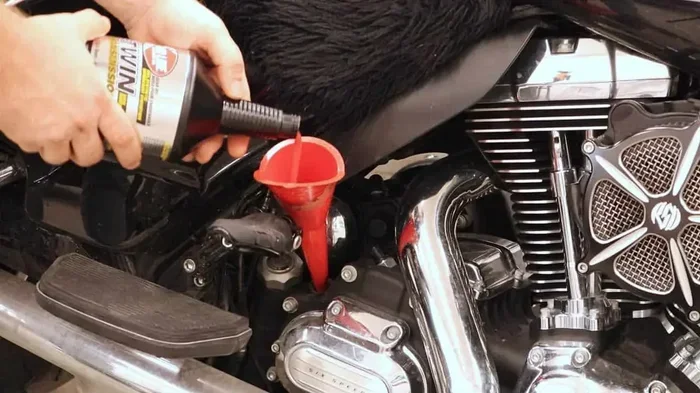
Oil changes are the single most important maintenance task. The turbochargers spin at over 100,000 RPM. They rely on a constant flow of clean oil to stay lubricated. Dirty or old oil can cause turbo failure. Change your oil at the recommended intervals, no exceptions.
Bugatti recommends specific synthetic oils designed for high-boost applications. These oils maintain their viscosity at extreme temperatures. They also contain additives that protect turbo bearings from wear. Using the correct oil is not optional, it is essential.
Regular Inspection Checklist
Here is a practical checklist for maintaining a quad-turbo engine:
- Check turbo boost pipes for cracks or leaks every service interval.
- Inspect intercooler lines for any signs of damage or loose connections.
- Listen for unusual sounds from the turbochargers during acceleration.
- Monitor boost pressure readings using diagnostic tools.
- Replace air filters regularly to ensure clean air reaches the turbos.
- Check exhaust manifold bolts and gaskets for any signs of leakage.
Common Mistakes Owners Make
One of the biggest mistakes is ignoring small warning signs. A slight whistling sound from the turbo area could indicate a leak. A slight drop in power could mean one turbo is not spooling correctly. Catching these issues early can prevent expensive repairs down the road.
Another mistake is neglecting the engine cooling system. Overheating is the enemy of any turbocharged engine. Make sure your coolant is fresh and your water pump is functioning properly. A failed water pump on a 1,500-horsepower engine can cause catastrophic damage in minutes.
Also, avoid prolonged idling in high-boost mode. This puts unnecessary stress on the turbochargers and the engine as a whole. If you are warming up the car, use a gentle driving style rather than holding the engine at high RPM while stationary.
Conclusion
The Bugatti quad-turbocharged powerplant represents the pinnacle of automotive engineering. Four turbochargers working together with a massive W16 engine produce power levels that were once thought impossible for a road car. Every component, from the exhaust manifold to the intercooler system, is designed with one goal in mind: maximum performance.
Understanding how this system works gives you a new appreciation for what Bugatti has achieved. The combination of forced induction technology, precise boost management, and advanced cooling solutions creates an engine that is as intelligent as it is powerful.
If you are a car enthusiast, take the time to learn more about how these incredible engines work. The engineering behind the quad-turbo engine is fascinating, and it shows what is possible when brilliant minds push the boundaries of what a car engine can do. Whether you are maintaining one of these machines or simply admiring them from afar, the Bugatti quad-turbocharged powerplant deserves your respect and admiration.
The future of automotive performance will likely build on the lessons Bugatti learned with this system. Four turbochargers, 16 cylinders, and relentless innovation. That is the formula that redefined what a production car engine can achieve.
Frequently Asked Questions
What does quad-turbocharged mean?
A quad-turbocharged engine uses four separate turbochargers to force air into the combustion chambers. Each turbo is connected to a specific set of cylinders. This setup provides better response and more consistent power than smaller turbo systems.
How much horsepower does Bugatti’s quad-turbo W16 produce?
The Bugatti W16 engine produces approximately 1,500 horsepower in its most recent versions. This incredible output comes from the combination of 8.0 liters of displacement and four turbochargers working together to deliver maximum forced induction.
Is a quad-turbo engine harder to maintain than a regular engine?
Yes, a quad-turbo engine requires more careful maintenance. The turbochargers need clean oil, proper cooling, and regular inspections. Boost lines and intercooler systems also need attention. However, following the manufacturer’s maintenance schedule keeps everything running smoothly.
What is the difference between twin-turbo and quad-turbo?
A twin-turbo setup uses two turbochargers, while a quad-turbo uses four. Four turbos allow for smaller, faster-spinning units that reduce lag. Each turbo handles fewer cylinders, creating more balanced and efficient airflow across the engine.
Can a quad-turbo engine be used in regular cars?
Technically yes, but it would be overkill and very expensive for a standard vehicle. Quad-turbo systems are designed for extreme performance applications. Most cars achieve great results with naturally aspirated or single-turbo setups that are simpler and more affordable.
Why does Bugatti use a W16 engine instead of a V12 or V10?
The W16 layout allows Bugatti to fit 16 cylinders into a compact space. Two narrow-angle V8 engines share a single crankshaft. This design provides the displacement needed for massive power while keeping the engine short enough to fit in a passenger car chassis.