Does a BMW Have to Be Serviced by BMW or Anyone Else
Does a BMW have to be serviced by BMW? The short answer is no — you can service your BMW at independent shops and keep your warranty intact. Many BMW owners save hundreds by choosing independent BMW mechanics who follow the same service schedule. Understanding your options helps you make smarter decisions about BMW maintenance cost and BMW service interval timing.
Owning a BMW comes with a lot of perks. The driving experience is smooth, the engineering is top-notch, and the brand prestige is real. But with those perks comes a common question that confuses many owners. Does a BMW have to be serviced by BMW? The answer might surprise you. You do not have to visit a dealership every time your car needs attention. In fact, there are many perfectly valid alternatives that can save you time and money.
This guide breaks down everything you need to know about where to service your BMW. We will cover warranty rules, independent shops, costs, and practical tips. Whether you own a new model or a used BMW, this article will help you make the best decision for your car and your wallet.
Key Takeaways
- You are not required to use a BMW dealership: Federal law protects your right to choose any qualified shop for warranty-covered service.
- Independent shops can be just as good: Many BMW-certified independent technicians offer expert care at lower prices.
- Keeping proper records matters: You must follow the BMW service interval and document all work to protect your warranty.
- Using genuine BMW parts is not always mandatory: Aftermarket parts can meet or exceed OEM quality when chosen carefully.
- Cost savings can be significant: Independent BMW repair shop visits often cost 30 to 50 percent less than dealership service.
- Know your warranty terms: Understanding what is covered helps you decide where to take your car for BMW routine maintenance.
📑 Table of Contents
Understanding BMW Warranty Rules
Many people believe that using anything other than a BMW dealer will void their warranty. This is a myth. The Magnuson-Moss Warranty Act in the United States clearly states that a manufacturer cannot require you to use only their service centers. You have the legal right to choose any qualified BMW independent mechanic for BMW scheduled maintenance.
However, there are some important conditions. If a problem arises that is covered under warranty, BMW may ask for proof that the service was done correctly. This is where keeping detailed BMW service records becomes essential. You need receipts, invoices, and documentation that show your car received proper care.
What the Warranty Actually Covers
BMW new vehicles typically come with a 4-year or 50,000-mile basic warranty. The powertrain warranty often extends further. These warranties cover defects in materials and workmanship. They do not cover normal wear and tear items like brake pads or oil filters unless there is a manufacturing defect.
Here is what you should know about warranty coverage:
- Basic warranty: Covers most components for 4 years or 50,000 miles.
- Powertrain warranty: Covers the engine and transmission, often longer than the basic warranty.
- Corrosion warranty: Protects against rust for a set period.
- Roadside assistance: Usually included for the first few years.
If you follow the BMW service interval schedule and keep records, BMW cannot deny a warranty claim simply because you did not visit a dealership. This is a powerful right that many owners overlook.
When Dealership Service Makes Sense
There are times when going to a BMW dealership is the right call. If your car is still under warranty and you want maximum peace of mind, the dealership offers a streamlined experience. They have access to factory tools, updated software, and BMW certified technician staff who know the brand inside and out.
Dealerships also keep your BMW service records directly in the BMW system. This makes it easy to prove maintenance history if you ever sell the car. For complex issues involving BMW electrical systems or software updates, a dealership can sometimes offer a faster resolution.
But dealership service comes at a premium. Labor rates at BMW dealers are often significantly higher than at independent shops. A simple BMW oil change can cost two to three times more at a dealer compared to a trusted independent mechanic.
Independent BMW Shops: A Smart Alternative
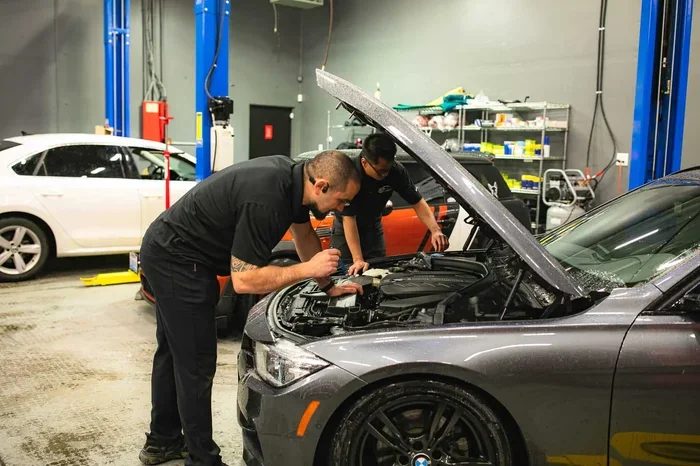
The idea of taking your BMW to a neighborhood garage might sound risky. But the truth is that many independent shops specialize in German luxury vehicles. These BMW repair shop locations employ technicians who are trained and certified specifically for BMW models. Some even hold BMW factory certifications.
Independent shops offer several advantages that make them a great choice for BMW routine maintenance:
- Lower labor rates: You can save 30 to 50 percent compared to dealership pricing.
- Personalized attention: Independent shops often have smaller client loads, meaning faster service.
- Flexible scheduling: No need to work around dealership hours or appointment backlogs.
- Honest assessments: Independent shops often have a reputation for transparent, no-pressure service.
- Specialized tools: Many modern independent shops invest in the same diagnostic equipment used by dealers.
When choosing an independent shop, look for certifications. ASE certification is a good baseline. Even better, find a shop that employs BMW certified technician staff or has formal training from BMW. Ask for references and read online reviews before committing.
One thing to keep in mind is that some independent shops may not have access to the latest BMW software updates. For major services or recalls, you might need to visit a dealership. But for everyday BMW maintenance cost-saving tasks like oil changes, brake inspections, and fluid flushes, an independent shop works perfectly well.
Do You Need Genuine BMW Parts?
This is one of the most debated topics among BMW owners. Dealerships will always recommend BMW genuine parts. They argue that only OEM (Original Equipment Manufacturer) parts meet the exact specifications of your vehicle. There is some truth to this, but it is not the whole story.
Aftermarket parts have come a long way. Many reputable aftermarket brands produce parts that meet or exceed OEM standards. For example, brake pads from trusted aftermarket companies often perform better than factory pads in certain conditions. The key is to choose quality brands and avoid the cheapest options you find online.
Here is a quick comparison to help you decide:
| Factor | Genuine BMW Parts | Quality Aftermarket Parts |
|---|---|---|
| Price | Higher | Lower to moderate |
| Fit and finish | Exact OEM match | Usually very close to OEM |
| Warranty | BMW backing | Varies by brand |
| Availability | Dealer only | Widely available |
| Performance | Reliable | Often equal or better |
For warranty-covered repairs, it is safest to use BMW genuine parts. This removes any argument about whether the parts caused a failure. For wear items like filters, wipers, and brake pads, quality aftermarket parts are a smart way to reduce your BMW maintenance cost without sacrificing quality.
BMW Service Intervals and What They Mean
BMW uses a condition-based service system. This means your car monitors itself and alerts you when specific components need attention. The dashboard will display messages like BMW service due or BMW inspection required. These alerts are based on driving habits, mileage, and time elapsed.
Understanding these intervals helps you plan your maintenance budget. Here are the typical BMW service interval milestones:
- Every 10,000 miles or once a year: Oil change, inspection of basic systems.
- Every 20,000 miles: Air filter replacement, cabin filter check, brake inspection.
- Every 30,000 miles: Spark plug replacement, brake fluid flush, more thorough inspection.
- Every 60,000 miles: Major service including transmission fluid, coolant flush, and belt inspection.
Following these intervals is critical. If you skip services or delay them too long, you risk damaging expensive components. The BMW engine repair costs that follow neglected maintenance can far exceed the savings you thought you were making by skipping a service visit.
Whether you go to a dealership or an independent shop, make sure they follow the BMW-recommended service schedule. Both types of shops should use the same service procedures and maintenance guidelines.
Common Mistakes BMW Owners Make
Even well-meaning BMW owners can make mistakes when it comes to car care. Here are some of the most common ones:
Skipping records. If you do not keep a detailed log of every service, you have no proof of proper maintenance. This can lead to warranty disputes. Always ask for a detailed invoice that lists every part replaced and every service performed.
Ignoring the check engine light. BMW vehicles are equipped with sensitive BMW electrical systems that detect even small issues. A check engine light should never be ignored. Even if the car seems to drive fine, the underlying issue could worsen over time.
Choosing the cheapest option. The lowest bid is not always the best deal. Poor-quality parts or inexperienced technicians can lead to repeat repairs. Focus on value rather than price alone.
Overlooking the 12V power system. BMW vehicles rely on a 12V electrical system for many functions. If you install accessories like a 12v to 230v car inverter or modify your 12v car socket to 3 pin setup, make sure the work is done properly. Poor electrical connections can cause a range of problems, from blown fuses to sensor malfunctions.
Forgetting weight limits. BMW vehicles have specific weight capacities. Overloading your car beyond its rated limit can strain the suspension, brakes, and engine. Always check your owner manual for the maximum payload. Something being 000 lbs heavy for a car can cause real damage if you exceed the limits regularly.
Quick Tips for BMW Owners
Here are some fast, practical tips to keep your BMW running strong:
- Check your oil level every two weeks, especially on older models.
- Keep a folder of all service receipts and invoices.
- Use only the recommended oil grade specified in your owner manual.
- Wash the undercarriage regularly, especially in winter months.
- Address unusual noises or vibrations immediately.
- Build a relationship with a trusted BMW repair shop before you need major work.
- Never ignore dashboard warning lights, even if they turn off on their own.
How to Choose the Right Service Provider
Deciding where to service your BMW comes down to a few key factors. Consider what matters most to you: cost, convenience, expertise, or warranty coverage.
Start by checking reviews in your local area. Look for shops that specifically mention experience with BMW or German vehicles. Ask friends, family, or online BMW forums for recommendations. The BMW community is passionate and helpful, and fellow owners often have great suggestions.
Next, visit the shop in person before committing. Ask about their certifications, the tools they use, and whether they have experience with your specific BMW model. A good shop will be happy to answer these questions and show you their credentials.
Finally, consider a hybrid approach. Many BMW owners use the dealership for warranty-covered work and complex repairs. They use independent shops for routine BMW routine maintenance like oil changes, tire rotations, and brake services. This approach gives you the best of both worlds: warranty protection and cost savings.
Remember, the most important thing is that your BMW receives proper care regardless of where you take it. A well-maintained BMW will reward you with years of reliable performance and driving pleasure.
The Bottom Line
So, does a BMW have to be serviced by BMW? The clear answer is no. You have every right to take your BMW to an independent BMW repair shop and still maintain your warranty coverage. The key is staying organized with your BMW service records and following the recommended BMW service interval schedule.
Choosing between a dealership and an independent shop depends on your specific situation. New car owners under warranty may prefer the dealership for complex work. Experienced BMW owners often find that independent shops offer better value and personalized service. Whatever you choose, prioritize quality and documentation.
Your BMW is a significant investment. Taking care of it properly, whether at a dealership or an independent shop, protects that investment for years to come. Stay on top of your BMW maintenance cost planning, keep good records, and enjoy the driving experience that makes BMW so special.
Whether you are dealing with a simple BMW oil change or a complex BMW engine repair, you now have the knowledge to make the best decision. Your car, your choice, your wallet will thank you.
Frequently Asked Questions
Can I service my BMW at any shop and keep my warranty?
Yes, federal law protects your right to choose any qualified shop for warranty-covered service. As long as you follow the BMW-recommended BMW service interval and keep detailed records, BMW cannot deny a warranty claim simply because you did not visit a dealership.
Is it cheaper to service a BMW at an independent shop?
In most cases, yes. Independent BMW repair shop locations typically charge 30 to 50 percent less in labor compared to BMW dealerships. You can also save money by choosing quality aftermarket parts for non-warranty work.
Do I need to use genuine BMW parts for warranty repairs?
For warranty-covered repairs, using BMW genuine parts is the safest approach. It removes any potential disputes about whether aftermarket parts contributed to a failure. For routine wear items, quality aftermarket parts are usually a perfectly fine choice.
How often does a BMW need scheduled maintenance?
BMW uses a condition-based system, but typical services occur every 10,000 miles for basic maintenance and every 30,000 miles for more comprehensive work. Always refer to your specific model’s owner manual for the exact BMW service interval recommendations.
What happens if I skip a BMW service interval?
Skipping services can lead to accelerated wear on critical components like the engine and transmission. It may also complicate warranty claims if a related issue develops. Staying current with BMW routine maintenance helps prevent expensive BMW engine repair bills down the road.
Are BMW independent mechanics as good as dealership technicians?
Many independent BMW independent mechanic professionals are highly skilled and BMW-certified. They often have years of specialized experience with German vehicles. The key is to research and choose a reputable shop with proper certifications and strong customer reviews.