Car Parking Rules in Mumbai Housing Society Explained
Car parking rules in housing society Mumbai can feel confusing, but they are essential for every resident. These rules keep your society organized, safe, and fair for everyone. Understanding your society’s bye-laws helps you avoid fines and disputes. This guide covers everything from resident permits to visitor parking and common mistakes. Read on to become a parking-smart resident in your Mumbai housing society.
Living in a Mumbai housing society means sharing space with hundreds of neighbours. One of the biggest daily challenges? Finding a parking spot. Car parking rules in housing society Mumbai exist to make this easier for everyone. Without clear guidelines, parking areas turn into chaotic zones. Cars block each other. Visitors struggle to find space. Tensions rise among residents.
This guide breaks down everything you need to know. We cover the basics, the bye-laws, visitor rules, and how to handle disputes. Whether you live in a small old building or a luxury high-rise, these tips will help. Let us walk you through the world of society parking guidelines in Mumbai.
Key Takeaways
- Know your bye-laws: Every Mumbai housing society has its own parking rules defined in the society bye-laws.
- Visitor parking matters: Clear guest parking guidelines prevent daily conflicts and keep the common area free.
- Unauthorized parking leads to fines: Parking in others’ spots or common areas can result in penalties.
- Multi-story parking is common: Most modern Mumbai societies offer basement or multi-level parking for residents.
- Disputes are resolvable: The society committee and BMC regulations provide frameworks to solve parking conflicts.
- Parking management systems help: Digital tools and permits make parking smoother for everyone.
📑 Table of Contents
- Why Parking Rules Matter in Mumbai Housing Societies
- Understanding Your Society’s Bye-Laws on Parking
- Common Parking Rules Every Resident Should Know
- Visitor Parking and Guest Guidelines
- Types of Parking in Mumbai Housing Societies
- Parking Disputes and How to Resolve Them
- Tips for Better Parking Management in Your Society
- Key Takeaways
- Conclusion
Why Parking Rules Matter in Mumbai Housing Societies
Mumbai is one of the most crowded cities in India. Space is limited. Every square foot counts. In this context, parking in your housing society is a valuable resource. Without rules, the strongest or the first to wake up would take all the spots. That is not fair to anyone.
Car parking rules in housing society Mumbai serve a bigger purpose than just organizing cars. They protect residents’ rights. They ensure safety. They maintain peace in the community. When everyone follows the same society parking guidelines, daily life becomes smoother.
Most Mumbai housing societies are governed by the Maharashtra Ownership Flats Act (MOFA). This law gives the society committee the power to create and enforce rules. The committee, along with the society secretary, drafts the parking section of the bye-laws. These bye-laws are legally binding. Every resident must follow them.
Who Makes the Parking Rules?
The society’s managing committee creates and updates parking rules. This committee is elected by the residents during the annual general meeting (AGM). The committee works with the society secretary and sometimes a legal advisor. Together, they ensure the parking rules align with BMC (Brihanmumbai Municipal Corporation) regulations and MOFA guidelines.
It is important to note that the committee cannot make rules that go against the law. For example, they cannot completely ban residents from parking in their own building. Any rule must be fair and reasonable. Residents can challenge unfair rules through legal channels.
Understanding Your Society’s Bye-Laws on Parking
Every housing society in Mumbai has a set of bye-laws. These are the governing documents of the society. The parking section of these bye-laws is the most important document for residents. Before you move in, or even if you have lived there for years, read this section carefully.
What Do Society Bye-Laws Usually Say About Parking?
Most society bye-laws parking sections cover these key points:
- Parking allocation per flat: Each flat gets a fixed number of parking spots. This is usually one covered spot and one open spot.
- Common parking area usage: Some spots are shared and must be used only for temporary parking.
- Visitor parking rules: Guest spots are reserved for short-term visits.
- Unauthorized vehicles: Rules about non-resident cars parked in the society.
- Parking fees and maintenance charges: Some societies charge extra for additional parking.
These bye-laws are registered with the sub-registrar office. They carry legal weight. If your society has not updated its bye-laws in years, it may be time to push for a revision at the next AGM.
Can You Change the Parking Rules?
Yes, but it takes effort. Changing society bye-laws requires a special resolution passed at the AGM. This means a majority of members must vote in favour. The process can take time, but it is possible. Many modern societies in Mumbai update their parking rules every few years to reflect changing needs.
For example, some societies have shifted from open parking to multi-story parking systems. Others have introduced digital parking management to reduce confusion. If you see a problem with how parking works in your society, bring it up at the AGM.
Common Parking Rules Every Resident Should Know
While every society is different, most car parking rules in housing society Mumbai share common elements. Here is what you can expect in most buildings across the city.
Resident Parking Allocation
Each flat in the society is assigned specific parking spots. These are usually mentioned in the allotment letter or the society registration document. The allocation is based on the flat size and the total number of spots available.
Here is what typical parking allocation looks like:
- 1 BHK flats: Usually get one covered parking spot.
- 2 BHK and 3 BHK flats: Get one covered and one open spot.
- Larger flats and penthouses: May get two covered spots depending on the society’s rules.
You cannot sell or transfer your parking spot to someone outside the society without committee approval. In many societies, parking spots are considered part of the flat ownership, but this depends on the bye-laws.
Unauthorized Parking and Its Consequences
One of the most common issues in Mumbai societies is unauthorized parking. This happens when a resident parks in a spot that does not belong to them. Or when someone parks in the common area, blocking others.
Most societies take this seriously. Consequences can include:
- Warning notices from the society committee.
- Parking fines that vary from Rs. 500 to Rs. 5,000 per incident.
- Towing of vehicles in extreme or repeated cases.
- Blacklisting of the vehicle number from the society gates.
The society parking fine amount is usually mentioned in the bye-laws. If it is not, the committee can set it through a resolution. Always check your society’s specific rules to know the exact penalties.
Emergency and Service Vehicle Parking
Every society must keep certain spots clear for emergencies. Fire trucks, ambulance vehicles, and garbage trucks need access at all times. Parking in these designated spots is strictly prohibited. Violators can face heavy fines and even legal action.
Some societies also reserve spots for maintenance staff, delivery personnel, and security guards. These are clearly marked and should not be used by residents.
Visitor Parking and Guest Guidelines
Visitors are a part of daily life in any housing society. Friends, family, delivery workers, and service professionals all come and go. Handling visitor parking rules well can prevent a lot of headaches.
How Visitor Parking Works in Most Societies
Most Mumbai societies have a dedicated visitor parking area. This is usually near the main entrance for easy access. Here is how it typically works:
- Short-term parking: Visitors can park for a few hours. The exact time limit varies by society but is usually 2 to 4 hours.
- Visitor registration: Many societies ask visitors to register at the gate. The security guard notes the vehicle number and the resident they are visiting.
- Overstaying penalties: If a visitor stays beyond the allowed time, the resident may be charged a fee.
- Daily visitors: Some societies have rules about frequent visitors, like domestic helpers or regular delivery people.
Tips for Handling Visitor Parking Smoothly
Dealing with visitor parking can be tricky, especially in densely packed Mumbai societies. Here are some practical tips:
- Inform your neighbours: If you are expecting a large group, let the society secretary know in advance.
- Use the visitor log: Always ask visitors to use the society’s visitor registration system.
- Park responsibly: Make sure your guest does not block your own parking spot or others’.
- Communicate with the committee: If visitor parking is always full, raise the issue at the AGM for a solution.
Clear visitor parking rules benefit everyone. They reduce arguments and keep the entrance area free and accessible.
Types of Parking in Mumbai Housing Societies
Not all parking spots are the same. Mumbai housing societies offer different types of parking. Understanding these can help you make the most of your allotted space.
Covered Parking
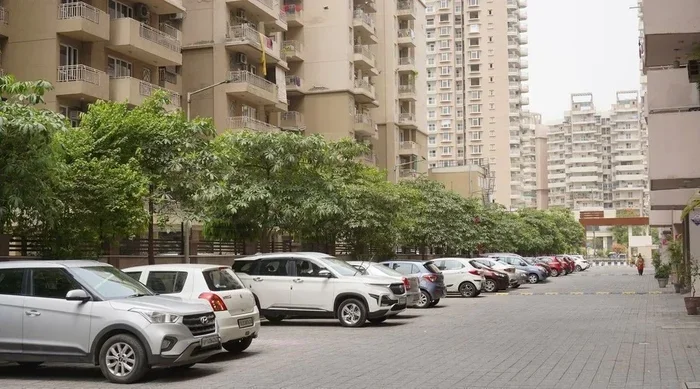
Covered parking is inside a building, usually in a basement or a dedicated parking level. This is the most sought-after type of parking in Mumbai because it protects cars from rain, sun, and dust. Covered spots are typically assigned to specific flats and are part of the resident parking permit system.
Open Parking
Open parking is in the open area of the society compound. These spots are usually less expensive to maintain but offer less protection from weather. In many societies, open spots are shared among residents on a first-come, first-served basis.
Multi-Story Parking
Larger societies and new constructions often have multi-story parking structures. These use vertical space efficiently and can accommodate many more vehicles. Multi-story parking is becoming increasingly common in premium and mid-range housing societies across Mumbai.
Common Parking Area
The common parking area is shared space that belongs to all residents collectively. This area should be used only for temporary parking. No resident should permanently occupy common parking spots. Misuse of common areas can lead to complaints and legal action from other residents.
Parking Disputes and How to Resolve Them
Disputes over parking are among the top reasons for conflicts in Mumbai housing societies. The good news is that most of these can be resolved peacefully if you follow the right process.
Common Parking Disputes
Here are the most frequent parking space dispute scenarios in Mumbai societies:
- Spot encroachment: A resident parks partly in another resident’s spot.
- Unauthorized vehicles: Someone parks a car that does not belong to a society member.
- Blocked access: A parked car blocks the entrance, exit, or emergency lane.
- Additional parking demands: A resident wants a second spot when all spots are taken.
- Guest overstaying: A visitor’s car stays in the society for days without moving.
Steps to Resolve Parking Disputes
If you face a parking issue, follow these steps:
- Talk to the neighbour first: Most issues can be resolved with a polite conversation.
- Contact the society secretary: The secretary can mediate and remind residents of the rules.
- Raise it at the committee meeting: The managing committee can issue formal warnings or decisions.
- File a complaint with the society: Written complaints create a record and push for action.
- Seek legal help if needed: If the committee fails to act, residents can approach the sub-registrar or a civil court.
The BMC parking regulations also provide a framework. If a society’s parking blocks a public road or fire lane, the BMC can intervene and issue notices to the society.
Expert Insights on Parking Dispute Resolution
Legal experts in Mumbai recommend that societies set up a dedicated parking grievance committee. This small group of residents can hear complaints and suggest solutions quickly. Having a fast-track process for parking disputes reduces the burden on the main managing committee and keeps peace in the society.
Tips for Better Parking Management in Your Society
Whether you are a resident or a committee member, you can play a role in improving parking in your society. Here are practical steps that work.
Implement a Parking Permit System
A resident parking permit system is one of the simplest and most effective tools. Every resident gets a sticker or card for their car. The security guard at the gate checks this before allowing entry. This prevents unauthorized vehicles from entering the society.
Use Digital Parking Management
Many modern societies in Mumbai are switching to digital tools. Apps and software can track parking allocations, visitor entries, and fine payments. A parking management system reduces human error and makes the process transparent for everyone.
Conduct Regular Parking Audits
The society committee should review parking usage every few months. This helps identify spots that are always empty, spots that are consistently misused, and areas that need better signage. Regular audits keep the system fair and up to date.
Educate Residents About the Rules
Many parking problems happen because residents simply do not know the rules. The society should distribute a copy of the parking section of the bye-laws to every flat. Regular notices in the society notice board or WhatsApp group also help keep everyone informed.
Plan for Future Parking Needs
As families grow and more cars enter the society, parking demand increases. Smart societies plan ahead. They may convert open areas into parking zones, build additional levels, or introduce a shared parking pool for residents who rarely use their cars.
Key Takeaways
- Know your bye-laws: Every Mumbai housing society has its own parking rules defined in the society bye-laws.
- Visitor parking matters: Clear guest parking guidelines prevent daily conflicts and keep the common area free.
- Unauthorized parking leads to fines: Parking in others’ spots or common areas can result in penalties.
- Multi-story parking is common: Most modern Mumbai societies offer basement or multi-level parking for residents.
- Disputes are resolvable: The society committee and BMC regulations provide frameworks to solve parking conflicts.
- Parking management systems help: Digital tools and permits make parking smoother for everyone.
- Follow the process: Always raise parking issues through the proper channels before taking matters into your own hands.
Conclusion
Car parking rules in housing society Mumbai are not just bureaucratic paperwork. They are the foundation of a peaceful, organized living environment. When every resident understands and follows the rules, parking becomes easier for everyone. Fights decrease. Space is used fairly. The society runs more smoothly.
Take the time to read your society’s parking bye-laws. Attend AGM meetings where parking is discussed. Communicate with your neighbours and the committee. Small actions from each resident can make a big difference. A well-managed parking system is a sign of a well-run housing society.
Remember, parking is a shared resource. Respecting the rules means respecting your neighbours. Start today. Know your rights, follow the guidelines, and help your society become a better place to live.
Frequently Asked Questions
What are the basic car parking rules in housing society Mumbai?
Most Mumbai housing societies follow rules set in their bye-laws under the Maharashtra Ownership Flats Act. These rules cover resident parking allocation, visitor parking limits, unauthorized vehicle policies, and common area usage. Every resident must follow the parking section of the society’s registered bye-laws.
Can a housing society charge extra for parking in Mumbai?
Yes, many Mumbai societies charge additional maintenance fees or parking charges for extra parking spots. The amount is usually decided by the managing committee through a resolution at the AGM. These charges must be mentioned in the society’s financial rules and approved by the majority of members.
What happens if someone parks in my assigned spot in my society?
This is considered unauthorized parking and is against most society bye-laws. You should first inform the society secretary or security guard. The committee can issue warnings, levy fines, or even tow the vehicle if the behaviour continues. Keep a record of incidents for reference.
How long can a visitor park in a Mumbai housing society?
Visitor parking duration varies by society but is typically 2 to 4 hours. Some societies allow longer stays for family members. Frequent visitors may need to register with the society secretary. Always check your specific society’s visitor parking guidelines for exact rules.
Is it legal for a society to tow a car parked wrongly in Mumbai?
Yes, if the society bye-laws permit it and the parking violation is clear. The towing process must follow legal procedures. The society should inform the owner, display warning notices, and follow BMC regulations. Towing without proper notice or reason can lead to legal disputes.
How can I get an additional parking spot in my housing society?
You can apply to the society committee for an additional spot. Availability depends on whether there are unassigned or common parking areas. The committee may allocate extra spots based on a waiting list or through a resolution at the AGM. Some societies also offer shared parking pools for residents who rarely use their cars.