Everything You Should Know About Car Front Bumper Lights
Car front bumper lights are essential for visibility, safety, and style. Whether you drive on highways or off-road trails, the right bumper lights can transform how you see and are seen on the road. This guide covers everything from types and benefits to installation tips and common mistakes you should avoid.
Car front bumper lights are more than just a cosmetic upgrade. They play a vital role in how safely you drive, especially at night or in bad weather. Whether you are replacing old factory lights or adding new aftermarket lighting to your ride, understanding your options is the first step.
Many drivers underestimate the importance of their vehicle lighting setup. Stock lights often fall short when it comes to brightness and coverage. This is where aftermarket bumper lights come into play. They fill the gaps, light up dark roads, and make your car more visible to other drivers.
In this guide, we will walk you through everything you need to know about car front bumper lights. From the different types available to installation tips and common mistakes, we have you covered. Let us dive in.
Key Takeaways
- Multiple Types Available: LED bumper lights, fog lights, driving lights, and light bars all serve different purposes for your vehicle.
- Safety First: Upgrading your front bumper lights significantly improves nighttime visibility and road safety.
- Choose Wisely: Consider brightness, beam pattern, durability, and compatibility before buying any bumper-mounted lights.
- Installation Is Manageable: Most bumper light installations can be done at home with basic tools and wiring knowledge.
- Avoid Common Mistakes: Improper wiring, wrong beam patterns, and ignoring legal regulations are the top errors drivers make.
- Off-Road Needs Differ: If you hit the trails, off-road lighting setups with spotlights and rock lights make a big difference.
- Regular Maintenance Matters: Keeping your front bumper LED lights clean and wired properly extends their lifespan significantly.
📑 Table of Contents
What Are Car Front Bumper Lights?
Car front bumper lights are lighting units mounted on or near the front bumper of a vehicle. They serve both functional and aesthetic purposes. Unlike headlights, which sit higher on the vehicle, bumper lights sit lower and often provide a different angle of illumination.
These lights come in many forms. Some drivers use them as fog lights to cut through mist and rain. Others use them as driving lights for extra reach on dark highways. The term “front bumper lights” is broad and covers a wide range of vehicle lighting options.
The primary job of any bumper-mounted light is to improve visibility. When you drive at night, in fog, or on unpaved roads, your standard headlights may not be enough. Bumper lights fill in the dark spots and help you see the road ahead more clearly.
Today, most modern bumper lights use LED technology. LED stands for light-emitting diode. These bulbs use less power, last longer, and produce brighter light than older halogen bulbs. If you are thinking about upgrading your vehicle lighting, LED bumper lights are the way to go.
Why Do Front Bumper Lights Matter?
Visibility is the number one reason front bumper lights matter. When you cannot see well, you cannot react fast. Good lighting gives you more time to spot obstacles, animals, or changes in the road surface.
Beyond seeing better, bumper lights also help other drivers see you. This is especially true with daytime running lights and bright LED strips. The more visible your car is, the safer you are on the road.
Another reason these lights matter is weather. Rain, snow, and fog scatter the light from your main headlights. Bumper-mounted fog lights sit lower and cut through the mist more effectively. They reduce glare and improve your view of the road directly in front of the car.
Types of Front Bumper Lights
Not all bumper lights are the same. Different types serve different needs. Let us look at the most popular options available on the market today.
LED Bumper Lights
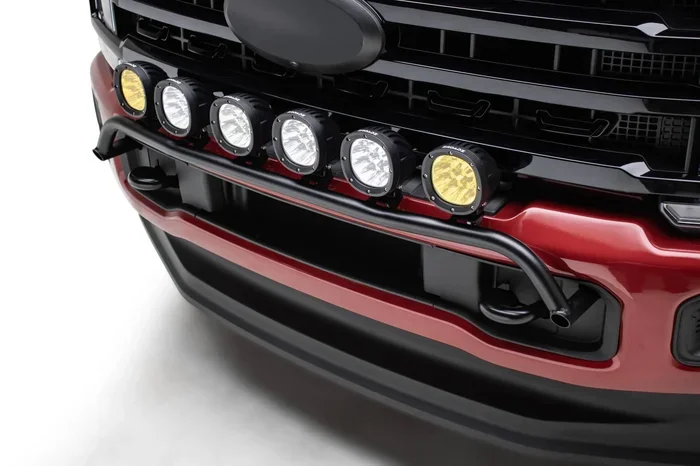
LED bumper lights are the most popular choice for modern vehicles. They are energy-efficient, long-lasting, and available in many shapes and sizes. You can find them in small pod lights, thin strips, or round projector-style units.
LED technology has improved a lot in recent years. Today’s LED lights produce crisp, white light that closely mimics daylight. This makes nighttime driving more comfortable and less tiring for your eyes.
Fog Lights
Fog lights are designed specifically for low-visibility conditions. They emit a wide, flat beam that cuts through fog, rain, and snow without bouncing back into your eyes. Most fog lights are mounted low on the bumper to get below the fog line.
If you live in an area with frequent fog or heavy rain, adding dedicated fog lights to your front bumper is a smart move. They work as auxiliary lights that complement your main headlights perfectly.
Driving Lights
Driving lights, also called auxiliary lights, are built for distance. They project a narrow, focused beam that reaches far down the road. These are ideal for highway driving where you need to see farther ahead.
Many off-road enthusiasts pair driving lights with spotlights. The driving lights cover the middle distance, while spotlights handle the far range. Together, they create a comprehensive lighting system for any driving condition.
Light Bars
Light bars are long, rectangular strips of LED lights. They are extremely popular among off-road drivers and truck owners. A light bar mounted on the front bumper provides wide, sweeping coverage of the area ahead.
Light bars come in many sizes, from compact 12-inch bars to full-size 40-inch models. Some are flush-mounted into the bumper for a clean look, while others sit on top for maximum reach.
Rock Lights and Spotlights
Rock lights are small, durable lights designed to illuminate the ground beneath and around your vehicle. They are essential for off-roading at night. You can mount them on the bumper, skid plate, or rocker panels.
Spotlights are focused beams that reach the farthest distance. They are great for spotting animals, obstacles, or trail markers well ahead of your vehicle. Many drivers use them in combination with other bumper-mounted lights for full coverage.
Halo Headlights and Projector Lamps
Halo headlights, sometimes called angel eyes, feature a glowing ring around the main headlight bulb. They add a distinctive look to the front of your car while also improving side visibility.
Projector lamps use a lens and reflector system to produce a sharp, focused beam pattern. They are brighter and more efficient than standard reflector headlights. Many drivers upgrade to projector headlamps as part of a complete front bumper lighting overhaul.
Benefits of Upgrading Your Bumper Lights
Upgrading your front bumper lights offers many advantages. Let us explore the most important benefits that come with a lighting upgrade.
Improved Nighttime Visibility
This is the biggest benefit by far. Better lights mean you can see more of the road ahead. You will spot potholes, debris, and animals much earlier. This gives you more time to react and avoid potential accidents.
Studies show that poor lighting is a leading factor in nighttime accidents. Upgrading your vehicle lighting setup can significantly reduce your risk on dark roads.
Enhanced Off-Road Performance
If you enjoy off-roading, bumper lights are a must-have. Trails are often unlit and full of unexpected obstacles. A proper off-road lighting setup with driving lights, spotlights, and rock lights transforms your capability on the trail.
You will be able to navigate tight corners, steep inclines, and rocky terrain with confidence. The extra light also helps you spot wildlife that may cross your path at night.
Better Weather Performance
Rain, snow, and fog all reduce visibility dramatically. Stock headlights often struggle in these conditions. Dedicated fog lights and auxiliary lights cut through the weather and give you a clearer view of the road.
Many drivers report feeling much safer during winter months after adding bumper-mounted fog lights to their vehicle. The difference in visibility is night and day.
Aesthetic Appeal
Let us be honest. New bumper lights look great. LED strips, halo rings, and sleek light bars give your car a modern, aggressive look. A lighting upgrade can completely change the appearance of your vehicle’s front end.
Many car enthusiasts consider lighting upgrades one of the best bang-for-your-buck modifications. The visual impact is immediate and noticeable.
Increased Vehicle Value
Adding quality aftermarket lighting can increase your vehicle’s resale value. Buyers look for cars that are well-equipped and well-maintained. A clean, professional lighting setup signals that the owner has taken good care of the vehicle.
How to Choose the Right Bumper Lights for Your Vehicle
Choosing the right front bumper lights can feel overwhelming with so many options available. Here are the key factors to consider before making a purchase.
Brightness and Lumens
Brightness is measured in lumens. The higher the lumen count, the brighter the light. For driving lights, look for lights in the 2,000 to 6,000 lumen range. For fog lights, 1,000 to 3,000 lumens is usually sufficient.
Be careful not to go too bright, though. Extremely bright lights can blind oncoming drivers, which is dangerous and often illegal. Always choose lights that provide good illumination without being blinding to others.
Beam Pattern
The beam pattern determines how the light spreads. There are three main types:
- Spot Beam: Focuses light far ahead in a narrow pattern. Great for highway driving and off-road use.
- Flood Beam: Spreads light wide across the road. Ideal for city driving and foggy conditions.
- Combo Beam: Combines spot and flood for versatile coverage. This is the most popular choice for all-around use.
Choose a beam pattern that matches your primary driving conditions. If you do a mix of highway and off-road, a combo beam is your best bet.
Durability and Weather Resistance
Bumper lights take a beating from road debris, water, and temperature changes. Look for lights with an IP67 or IP68 rating. This means they are fully waterproof and dustproof.
Choose lights with polycarbonate lenses instead of glass. Polycarbonate is much more impact-resistant and will not shatter from rocks or rough terrain.
Compatibility and Fit
Make sure the lights you choose fit your vehicle’s bumper. Some lights come with universal mounting brackets, while others are vehicle-specific. Check the product specifications and your vehicle’s make, model, and year before buying.
Also consider the wiring. Some lights come with plug-and-play wiring harnesses, which makes installation much easier. If you are not comfortable with electrical work, look for these plug-and-play options.
Color Temperature
Color temperature is measured in Kelvin (K). Most drivers prefer lights in the 5,000K to 6,500K range. This produces a clean white light that is easy on the eyes and provides excellent visibility.
Avoid very blue or very yellow lights for primary driving. While they may look cool, they do not perform as well as pure white light for visibility and safety.
Installation Guide for Bumper-Mounted Lights
Installing front bumper lights is a project many DIYers can handle. With the right tools and a bit of patience, you can have your new lights up and running in an afternoon.
What You Will Need
Before you start, gather these tools and materials:
- Screwdriver set (Phillips and flathead)
- Wire strippers and crimpers
- Electrical tape and heat shrink tubing
- Relay kit (for high-draw lights)
- Mounting brackets and hardware (usually included)
- Drill and appropriate drill bits (if needed)
- Wire connectors and fuse taps
Step-by-Step Installation
Step 1: Plan your mounting locations. Decide where each light will go on the bumper. Make sure they do not interfere with the grille, sensors, or existing factory lights.
Step 2: Mount the light brackets. Use the provided hardware to secure the brackets to the bumper. If your bumper has pre-drilled holes, use those. Otherwise, carefully drill new holes and use rubber grommets to protect the wiring.
Step 3: Wire the lights. Most bumper lights need a constant power source and a ground connection. For lights that draw more than 20 amps, use a relay to prevent overheating your vehicle’s electrical system.
Step 4: Connect the wiring harness. Run the wires along the bumper and into the engine bay. Use zip ties to secure the wiring and keep it away from moving parts and heat sources.
Step 5: Test the lights. Before finalizing everything, turn on the lights and check that they work properly. Make sure the beam pattern is aimed correctly and not blinding to other drivers.
Step 6: Secure everything and finish up. Once you confirm everything works, tighten all mounting bolts and wrap any exposed connections with electrical tape or heat shrink.
Quick Tips for a Clean Installation
- Always use a relay for lights over 20 amps to protect your vehicle’s wiring.
- Install a separate switch for your auxiliary lights so you can turn them on and off as needed.
- Use dielectric grease on electrical connections to prevent corrosion.
- Take photos during the process so you remember how everything connects if you need to remove the lights later.
- Aim your lights low and to the right to avoid blinding oncoming traffic.
Common Mistakes and Expert Tips
Even with the best intentions, many drivers make mistakes when installing or using their front bumper lights. Here are the most common errors and how to avoid them.
Mistake 1: Ignoring Legal Regulations
Every state and country has laws about vehicle lighting. Some restrict the brightness, color, or placement of aftermarket lights. Before you install any new bumper lights, check your local regulations. Illegal lighting can result in fines and failed inspections.
Expert Tip: Stick with white or amber lights for maximum legal compliance. Red and blue lights are typically reserved for emergency vehicles.
Mistake 2: Choosing the Wrong Beam Pattern
Many drivers buy the brightest light they can find without considering the beam pattern. A super-bright spotlight in the wrong location can blind other drivers and create dangerous situations.
Expert Tip: Match your beam pattern to your driving needs. Use fog lights for low, wide coverage in bad weather. Use driving lights for long-range visibility on dark roads.
Mistake 3: Poor Wiring and Connections
Loose or exposed wiring is a fire hazard and a common cause of electrical problems. Never leave connections uncovered or use wire that is too thin for the current draw of your lights.
Expert Tip: Always use properly sized wire, quality connectors, and a relay for high-draw lights. A small investment in good wiring pays off in safety and reliability.
Mistake 4: Skipping the Relay
High-power LED lights and light bars draw significant current. Connecting them directly to your vehicle’s factory wiring can overload the circuit and damage your electrical system.
Expert Tip: Always use a relay for any light that draws more than 15 amps. The relay protects your vehicle’s wiring and ensures a clean, consistent power supply to your lights.
Mistake 5: Neglecting Maintenance
Bumper lights sit low on the vehicle and are exposed to road debris, mud, and water. Over time, they can accumulate dirt and moisture, which reduces their output and can cause corrosion.
Expert Tip: Clean your bumper lights regularly with a soft cloth and mild soap. Check the seals and wiring connections every few months to ensure everything stays dry and secure.
Expert Insights: The Future of Vehicle Lighting
The automotive lighting industry is evolving fast. Matrix LED systems and adaptive driving beams are becoming more common. These systems adjust the light pattern automatically to illuminate the road without blinding other drivers.
Laser headlights are also entering the consumer market. They are incredibly bright and energy-efficient. While they are still mostly found on luxury vehicles, prices are dropping and availability is growing.
For now, a quality set of LED bumper lights remains the best upgrade for most drivers. They offer excellent performance, durability, and value. As technology advances, we can expect even smarter and more efficient lighting solutions in the years ahead.
Conclusion
Car front bumper lights are one of the most impactful upgrades you can make to your vehicle. They improve safety, enhance performance in tough conditions, and add a bold visual appeal to your car’s front end.
Whether you choose LED bumper lights, fog lights, driving lights, or a full light bar setup, the key is to pick the right lights for your needs. Consider brightness, beam pattern, durability, and compatibility before making your purchase.
Installation is straightforward for most setups, and the satisfaction of driving with better visibility is well worth the effort. Avoid common mistakes like poor wiring and ignoring legal regulations, and your bumper lights will serve you well for years to come.
Take the time to research your options, choose quality products, and install them correctly. Your front bumper LED lights will reward you with safer, more confident driving in any condition. Start your lighting upgrade today and feel the difference on the road.
Frequently Asked Questions
What are the best LED bumper lights for off-road use?
Look for lights with high lumens (4,000 or more), an IP67 waterproof rating, and a combo beam pattern. Brands like Rigid, ARC, and Baja Designs are popular choices among off-road enthusiasts for their durability and performance.
Can I install front bumper lights myself?
Yes, most bumper light installations are DIY-friendly. You will need basic tools, wiring supplies, and a relay for high-draw lights. If you are comfortable with basic electrical work, you can complete the installation in a few hours.
Are aftermarket bumper lights legal?
In most cases, yes. However, laws vary by location. Check your local regulations regarding light brightness, color, and mounting height. Stick with white or amber lights to stay on the right side of the law.
How do I clean and maintain my front bumper lights?
Wipe your lights regularly with a soft cloth and mild soap. Inspect the seals and wiring every few months. Apply dielectric grease to electrical connections to prevent corrosion and keep the lights performing at their best.
What is the difference between driving lights and fog lights?
Driving lights project a narrow, focused beam for long-distance visibility on clear roads. Fog lights emit a wide, flat beam designed to cut through low-visibility conditions like rain, snow, and fog. They serve different purposes and work best when used together.
How many lumens do I need for my bumper lights?
For most driving situations, 2,000 to 4,000 lumens per light is ideal. Fog lights work well at 1,000 to 2,000 lumens. For off-road spotlights, you may want 6,000 lumens or more. Choose based on your primary driving conditions and needs.